Profiling is so dangerous, isn’t it?  I mean, seriously.  As soon as you say something like “most migraineurs are women”, you’re leaving out huge numbers of us who ain’t.  Or if you say “migraineurs tend to be fat” you beg all kinds of questions – is it due to the medication they’re taking?  The time they spend in bed?  Is obesity a migraine trigger?  Are we “blaming” people who are overweight?  Did I just use the “f-word” in this post??

Smoking and chronic migraine?

Sure, profiles are interesting.  Maybe they allow us to focus more on women instead of men, since they have more migraine attacks.  Wait!  I don’t like that idea either.  We all need help, and we’re all very different!

But these types of generalities can be useful – as long as we’re careful with them.  They can point to tendencies.  To possible biological realities of migraine disease.  And to possible treatments.

But don’t tell me migraineurs are all depressed, or all women, or all f … frugal… or whatever.

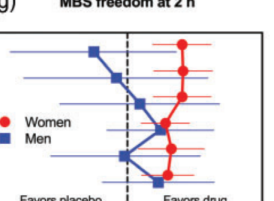
This is actually more of a comparison than a profile.  What’s the difference between those with chronic tension-type headache and those with chronic migraine – from The Journal of Headache and Pain.

Chronic TTH Chronic Migraine
Less common More common
Less likely to be female More likely to be female
More likely to drink alcohol Less likely to drink alcohol
Less likely to smoke More likely to smoke
Less likely to be obese More likely to be obese
Less likely to report frequent acute pain drug use More likely to report frequent acute pain drug use
More likely to be low educated Less likely to be low educated

This study may be even more useful in understanding chronic tension-type headache.  After all, a lot of the right column is pretty well known.  This is particularly true for weight issues (a struggle for migraineurs due to medication, and also a very possible factor in developing chronic migraine) and pain drug use (medication overuse is a HUGE factor when it comes to chronic migraine).

Could alcohol use influence chronic tension-type headache?  Or lifestyle issues related to a lower education?

But one of the problems with a study like this is that many people seem to have both conditions.  And there is increasing evidence that both conditions are related.

Do you suffer from chronic tension-type headache?  Have you found a direct link with alcohol consumption in particular?  Or, as a migraineur, have you found weight loss to be a help?  Or quitting smoking?

For more details:  Epidemiological profiles of patients with chronic migraine and chronic tension-type headache.

{ 0 comments }

5 Migraine Medications that may cause Weight Gain

sodium valproate (Epival)
paroxetine (Paxil)
metoprolol (Toprol-XL)
divalproex sodium (Depakote)
amitriptyline (Elavil)

DO NOT stop taking medication without talking to your doctor.
DO talk to your doctor if you’re gaining weight – there are options available.

These are medications that are often used as migraine preventatives – and often help – but that are also notorious for contributing to weight gain in some people.  Obviously there are other examples.  (Note:  I just included one brand name for the sake of space.  These medications are included in various other brand names.)

I appreciated the recent post from Diana-Lee – Avoiding & Coping With Migraine Medication-Related Weight Gain and Kerrie’s thoughts in Migraine Preventives & Weight Gain, so I thought I’d add some specifics to the conversation.

Have you experienced weight gain with any of these medications?  What about others – topiramate?  Propranolol?  What else?

{ 2 comments }

I’ve been getting a lot of questions regarding the ginger and sumatriptan study, so we’re going to take the time to talk about a few more details.

Obviously one study is not enough to change treatment practices around the world.  However, the researchers were motivated to study ginger because it had already shown great promise as a migraine treatment.

Previous Ginger Studies

First of all, ginger has been regularly used for many related conditions – vertigo, motion sickness, and pain conditions being the most well known.  Also, previous studies have shown very little problem with side effects.

Ginger is currently being studied to alleviate dental pain and inflammation.  And one study suggested that it works about as well as ibuprofen for menstrual pain.

Products containing ginger, such as Gelstat Migraine, have already helped many people fight migraine symptoms.  Gelstat Migraine has been studied in clinical trials, and the results were promising.

An older 1990 report showed that patients taking ginger during and after their attack were able to reduce frequency and severity of migraine.

Ginger Dosage in the Trial

In this trial, patients were given 5 capsules of either 50mg of sumatriptan or 250mg of ginger (these ginger capsules are 350mg).  Everyone was to take one capsule when a headache was coming on.  They didn’t know which they had (this was a double-blinded randomized controlled clinical trial).

This is actually a very low dose of ginger.  As you’ll see below, others have recommended a higher dose, even up to a gram or two a day as a preventative.  Ginger supplements are commonly 500mg and higher per capsule.

More on the study results

The patients had been generally diagnosed with migraine many years before, and they typically had several attacks per month.

Ginger and sumatriptan results were similar, with sumatriptan generally performing slightly better for actual headache pain.

250mg of ginger was used in this study, as mentioned above.  Previously 500mg had also been recommended, repeated every 4 hours up to 1.5 to 2g per day for 3-4 days.  Another report found that a woman found relief using similar amounts of ginger powder (1.5-2g) as a daily supplement.

The bottom line

The researchers of this study concluded that ginger should be preferred to sumatriptan because of the lack of significant side effects.  The only reported issue with ginger was indigestion (4% had some issues here – interesting considering that many people take ginger for digestion!).  But some patients taking sumatriptan experienced dizziness, vertigo, heartburn, and/or sleepiness (20% with one or more issue).  In the end, patients were slightly more satisfied with ginger as a migraine abortive.

Researchers are now calling for more study into what dosage is most effective.

This was also a short term study.  Longer term studies will help demonstrate if ginger can continue to fight migraine over the long term in individual patients.

For more on the study read the original post here.

{ 1 comment }

It was only last month that we talked about taking ginger to fight the pain of headache and migraine, as well as other symptoms.  Actually, ginger has long been a popular treatment for nausea, which is used regularly by doctors.

But a recent study in the journal Phytotherapy Research set out to investigate ginger specifically as a migraine abortive.

In a study of 100 patients, each patient received either sumatriptan (ie Imitrex) or ginger powder.  They did not know which one they were getting.

This was an abortive treatment, taken for 5 migraine attacks.  So what were the results?

  • After 2 hours:  with either treatment, there was a significant decrease in “mean headaches severity”.  Both treatments helped about the same amount.
  • Patient satisfaction:  About the same for either treatment.
  • Side effects:  Fewer in ginger, more in sumatriptan.

In the end, then, the treatments were very similar.  It would be interesting to know more about individual symptoms.  For example, did ginger help more with nausea?  Inflammation?

But the main benefit of ginger seems to be the lack of side effects, although that doesn’t mean you can just take all the ginger you want without checking with your doctor (especially if you’re diabetic, have a heart condition, or are pregnant).

Ginger powder capsules may be worth a look (such as these standardized ginger capsules), especially for those who haven’t been helped by triptans, or those who are concerned about side effects and long term effects of triptans.

Study abstract:  Comparison Between the Efficacy of Ginger and Sumatriptan in the Ablative Treatment of the Common Migraine

{ 12 comments }

Exercise Headache: 9 Tips (Graphic)

by James on 13 May 2013

Exercise Headache - 9 Tips

  1. Warm up / Cool down
  2. Start slow / end slow  (don’t suddenly start/stop intense exercise programs)
  3. Hydrate
  4. Posture
  5. Mild preventative medication  (talk to your doctor)
  6. Take something salty  (salt tablets are recommended only for very intense exercise in heat. Otherwise, try tomato juice or pretzels)
  7. Glucose tablets
  8. NSAIDs (ie Advil)  (talk to your doctor)
  9. Stay steady  (Exercise programs that constantly “change things up” and “surprise the body” may not be best for you)

Obviously the graphic doesn’t give a lot of extra information.  But do check out End exercise induced headache and Get a Headache after Working Out? (don’t miss the comments!)

{ 2 comments }