So, are you ready to fight migraine by “remote control”? Some people may have that chance within the next few weeks.
The device is called Nerivio Migra, a neuromodulation device, which stimulates nerves to fight migraine pain (read more details here – A “Smart” Non-Drug Arm Patch to Fight Migraine). It’s actually a patch which is attached to the upper arm.
Nerivio Migra is an abortive, meaning it is used when an attack hits, unlike some other devices that are used to prevent attacks. Back in the spring, the FDA approved the device for the United States, and the company (Theranica) is planning to have a limited release this year, with a wider release in 2020.
Trials are continuing to attempt to evaluate the value of the device for adolescents (if you’re in the USA, watch this Nerivio trial page and you might be able to participate).
As the product is closer to market, there is more information on Nerivio Migra, such as the instructional video below. For more information, be sure to visit the Theranica website.
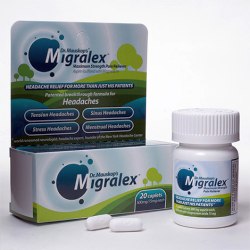
This is a very brief video from Dr. Alexander Mauskop of the New York Headache Clinic explaining why Migralex was developed.Migralex is an abortive that many of you are familiar with. It’s been helpful for many people with migraine and headache, and it’s available without a prescription.
Migralex works well for some because the whole is more than the parts. Very often, an individual ingredient (ie aspirin, magnesium…) won’t help. But a carefully measured combination of ingredients can make all the difference.
It’s important to emphasize that this is not an excuse to avoid seeing a doctor! But Migralex may be helpful for someone under a doctor’s care, or someone who has the symptoms that so far are not being effectively treated by their doctor.
Read more reviews of Migralex here. It can also be purchased through the link.
Dr. Mauskop’s Migralex, a new abortive, was finally announced by Dr. Alexander Mauskop, director and founder of the New York Headache Clinic.
Dr. Mauskop has been working on this one for a long time. He was also involved in the testing of an excellent preventative medication that we’ve talked about here before, Migrelief.
This abortive contains two very simple ingredients, both of which you’re most likely familiar with.
First, aspirin. Aspirin of course is one of the world’s favourite abortive drugs. Aspirin alone for migraine hasn’t been studied as much as you might think, though it does seem to help some. However, aspirin in combination is commonly used for migraine and other headaches – take for example Excedrin Migraine. With combinations, finding the right balance is always a challenge.
The other ingredient is magnesium. We’ve often talked about magnesium as a preventative. But it also seems to have a benefit as an abortive. Sometimes patients with migraine in the emergecy room are given a shot of magnesium, for example.
Once again, it’s the combination and balance that are key here. How much to use, what types work well together, how to coat the tablet – all that. Dr. Mauskop was also looking for a medication that could be used by a wide number of people with a minimum of side effects.
It might surprise you to discover that Migralex is not being promoted for migraine. But if you take a look at the name, you can see the direction it’s headed. The truth is that more studies are being done in hopes of official approval in the USA.
In the meantime, Migralex is being offered for "Tension-type Headaches, Stress Headaches, Sinus Headaches, Alcohol Headaches, Sex related Headaches, Menstrual Headaches, and Exertion Headaches" …and more.
These, you’ll notice, are not a list of all official headache classifications – the point is Migralex should help a lot of people with a variety of headache pain, not to mention some other symptoms as well.
Adults can take two tablets every six hours with a full glass of water.
I’m glad to see this option now available from someone who has done a lot of research in this area. I hope it will continue to show good results, and that it will soon be more widely available.