
Loneliness and Future Pain
If you’re lonely today, if you’re missing out on social interaction, face to face contact – does that increase your risk of future physical pain?

It’s certainly a relevant question. Actually, the connection between loneliness and pain is well known, but a recent study published in the journal Pain brings the discussion to a new level.
Taking a sample of 4906 people, the study took a look at the relationship between loneliness and pain over four years. It confirmed again that pain today may increase your risk of loneliness in the future. But also, loneliness today increases your risk of increased pain four years later.
Why? We might immediately think that a lonely person may be less likely to be active, or get exercise. Sure, that is a factor, and the study checked for that as well. Of course, if you’re inactive, there’s no doubt that your chances of future pain are increased.
But this study also tried to filter out various possible direct causes. For example, what if you take two people that are equally active, but one is lonely and one is not? It turns out that the lonely person is still significantly more likely to have more pain four years later.
What about actual depression? Yes, that’s a factor. But again, even if you’re lonely but not technically depressed, you’re still at risk for future pain.
Inflammation was also addressed in the study. Although inflammation at the beginning of the study did not increase chances of future loneliness (as pain in general does), it did, unsurprisingly, increase odds of more pain.
Social interaction is a very complex reality. There are so many factors – hearing a voice, laughter, touch, smell, empathy. Designing a study to nail down exactly what loneliness has to do with pain would be, in the end, virtually impossible.
But this and other studies to point out the importance of our social lives.
There are many reasons for loneliness. But we need to remember that it’s not just a temporary sad feeling. It can have consequences years later – consequences that may include more headaches, literally.
So don’t stop reaching out to others any way you can. You may not be a doctor, but you still may be able to alleviate pain in their lives. And remember that, even in your own life, loneliness should not be ignored.
Read the full study and discussion here: Bidirectional longitudinal associations between loneliness and pain, and the role of inflammation
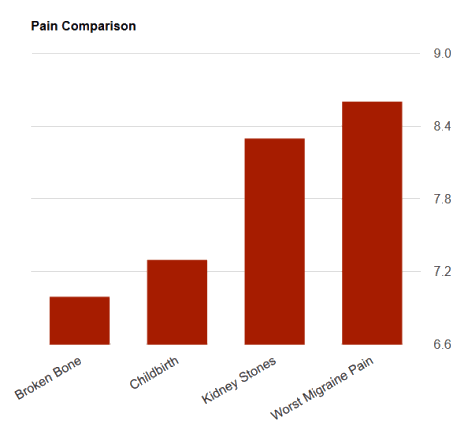 Remember, these are just averages from people who have experienced both migraine and the other type of pain.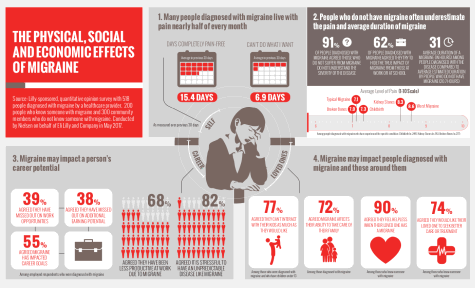
 Pain catastrophizing has been defined in various ways, but here’s the basic idea. Everyone seems to think differently about pain (and think differently at different times, in response to different types of pain, and so on). Some thoughts may be positive (“It will be over in a few hours”) and some thoughts may be negative (“There’s nothing I can do to make things better”).