

Concussion: What Kind of Rest is Needed?
A large study is questioning some of the common wisdom regarding treatment of concussion in children.
We’ve talked a lot in the past about concussion (which is a brain injury), especially related to sports injuries. Concussion needs to be taken seriously – it could result in ongoing symptoms. Recent recommendations include being very cautious of activities that could result in another concussion, and getting sufficient rest after the injury.
In particular, cognitive rest. That is, avoiding (for example) reading, homework, and video games. (For more, see the 2014 study Effect of Cognitive Activity Level on Duration of Post-Concussion Symptoms)
But while getting rest and avoiding activity with a risk of concussion seems to be the best, does that mean that the child or teen should lie in bed all day? Apparently not.
A study involving 3063 children and teens (up to the age of 18) compared patients who returned to physical activity (within 7 days) with those who were restricted to more “conservative” rest. The question – which group was experiencing more postconcussive symptoms at 28 days?
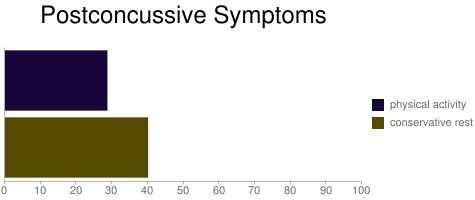 As you can see from the chart, those who went back to physical activity within 7 days were significantly less likely to have the unwanted symptoms.
Depending on who you talk to, there seem to be two dangers. First, keeping your child away from any physical activity seems to be a danger. Activity is all the more critical to growing children and teens – it can play an important part in their recovery. But the other danger remains – not taking the concussion seriously, and putting the child right back into the sport that caused the injury in the first place.
A slow and cautious return to low-risk physical activity, with limited brain-work for a while, seems to be the best advice.
For more on the study, see the abstract: Association Between Early Participation in Physical Activity Following Acute Concussion and Persistent Postconcussive Symptoms in Children and Adolescents. Also see Early return to physical activity after concussion may reduce post-concussive symptoms at the New York Headache Clinic.
 One interesting connection between migraine and epilepsy is the “cortical spreading depression” (CSD). CSD is a kind of electrical storm that passes through the brain of a migraine patient. It’s also been observed after a traumatic brain injury, and in patients with malignant strokes.
 For example, a study published last month in the American Journal of Medicine researched data on women who were evaluated for ischemic heart disease (“hardening of the arteries”). Of those women, anyone who had reported a history of migraine was at a higher risk of a “cardiovascular event” such as stroke or heart failure. (Study abstract:
  The researchers started with a database of millions of compounds that interact with this calcium channel. Then they started narrowing things down. Would this compound do what we want? Would it likely cause major side effects? Is it even available? If available, is it too expensive to manufacture? And so on, and so on.
 If you’re experiencing headaches during or after chemotherapy, you probably don’t need to be told that your body is already going through a lot of unwelcome changes. There are a huge number of things that can lead to head pain – the chemotherapy itself, other medications (including “painkillers”!) that you take along with the chemo, the cancer itself, changes in schedule and eating habits, and the many other changes that are happening in your body that are directly or indirectly related to your treatment.