There are a lot of you out there – and it doesn’t matter if it’s a multivitamin or a migraine medication – you dread taking pills. You choke, you gag, and it doesn’t matter what brilliant advice you get, the time comes and you have the same problem.
Or maybe you’re trying to help a child take a pill – something you feel they really need – and it’s a horrible disaster every time.
Believe it or not, wiser minds than mine have come up with some clever solutions to these problems. First, a spray.
The Spray Solution
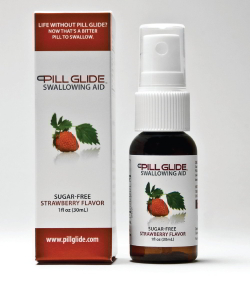
The spray comes from a company called FLAVORx, which actually specializes in make flavours for medications for children – and, believe it or not, even pets!
Using their expertise, they created Pill Glide, which not only adds a pleasant taste, it also allows the pill to slide down your throat without making you gag.
It’s sugar-free, and each bottle is good for about 100 uses. Pill Glide is also recommended to care givers, who help patients who for various reasons have extra trouble swallowing important medications.
Another clever invention is the pill swallowing cup. Oralflo has a small, portable cup especially designed to make taking pills easier.
You simply fill the cup half way with a drink of your choice. Then you snap on the lid, pop the pill or tablet into the top nozzle, and drink.
As one reviewer pointed out, there is a bit of a “technique” to this – not a hard one (it actually makes things a lot easier), but you do need to do it right. Check out the Oralflo Pill Swallowing Cup here.
An increasing number of people are discovering new things about their triggers, using a simple but very unique app.
Many of us – maybe even most of us – could give a list of things that trigger our migraine attacks. But sometimes knowing the list makes us forget just how complex migraine triggers can be – and so we miss some of the subtle things that could be saving us a lot of pain.
And that’s why the Curelator app was developed by Dr. Alec Mian and his team.
How Curelator Works
Curelator is the migraine diary you always wish you had had. It’s simple, but it uses data in a powerful way to give you actually useful information.
First, it asks you some basic questions (this is optional, but obviously the more information you input, the more useful the reports will be at the end). Then, every day you take a few minutes (maybe 2 or 3 minutes once you understand the system) to enter basic information about your day. Were you exposed to any typical triggers? What symptoms did you experience? What treatments did you use?
You need to do this regularly for 2-3 months (whether you experience a migraine attack or not) so that Curelator can get a good overview of your symptoms, medications, possible triggers, and treatments.
Now as it is, this gives you great data on the frequency and duration of your migraine and headache attacks. But you can get a subscription which will give you much more powerful information. (At the end I’ll give you a tip to save some money on the prescription.)
Sample Curelator Trigger MapWith the subscription, you’ll be able to see “trigger maps” and “protector maps”. You can see an example of a trigger map to the right.
According to the data this person has entered, bright lights, neck pain and soft drinks are highly associated with their migraine attacks, and so they are likely triggers. Anxiety, on the other hand, just has a vague association. She might want to check again in a couple of months to see if things have changed.
She’ll also see a similar map showing things that are probably not triggers, and also a map of things that seem to be “protectors” – when she’s exposed to these things, she’s actually less likely to have an attack.
Remember that list in your head? There may be one or two things on there you’ve been generally avoiding for years, and it may turn out that you’re avoiding them for no reason.
Interesting Findings
Curelator had a number of testers last year (I was one of them), and some interesting discoveries were made. For example, you know how everyone tells you to avoid caffeine and chocolate? Here’s the raw data. Out of 150 patients, caffeine only seemed to be a trigger for 2%. And chocolate? All right, a little higher – almost 7%. But that’s all! In fact, for over 9%, chocolate actually seemed to fight migraine (bring it on!).
The nice thing about Curelator is that it isn’t biased by past experience, or what a doctor says – it just calculates the cold, hard, numbers. So you just may discover some unexpected facts yourself.
A Few More Things You Need to Know
I know this is a long article, but it’s worth the time to understand this app and what it can do for you.
Curelator is backed by an advisory board with some big names in the world of migraine treatment and research. This is not a fly by night group, but people who have spent a good part of their lives helping real migraine patients. When they see a chance to reduce medications and improve health, that’s what they’re all about.
Now, you also wanted to know how to save some money. As I mentioned, there is a free version of the app which does track your headache and/or migraine attacks (cluster headache too). The app needs 45-90 days to get enough data (by the way, the app is typically for people experiencing 2 or more headache and/or migraine attacks per month). What you do is get the free version and use it for three months, and get a good set of data first. Then subscribe to get your maps. Now you have 6 months to confirm the data or see if it discovers more. That essentially gives you 9 months of information instead of 6.
Once you have the data, stop and think about it, or talk to a friend about it. You’re likely to discover some things you weren’t aware of before. This article from the National Headache Foundation about Curelator provides some fascinating examples of how a “trigger” may turn into a “protector”, for example.
Curelator is hoping to come out with some more useful features in the future, so stay tuned!
Meanwhile, get the app now! (And by the way, if you want an Android app, click the link on this page to let them know you’re interested and to be updated when it’s available)
Reports that a common type of eye drops may be able to stop migraine is getting attention. And researchers think there may be good reason why it could work for many more people.
Could it be that, with all the talk about specially formulated pills and new injection techniques, that we’ve been missing another obvious delivery method?
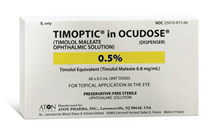
Several years ago the story came out of a woman who had been suffering from monthly migraine attacks. At one point she was diagnosed with bilateral ocular hypertension, and started taking eye drops (a timolol maleate solution). She didn’t have another migraine attack – and was still migraine free after 18 years.
Since then there have been more reports. Some patients take the eye drops regularly, others just at the first sign of an attack.
Timolol is actually already well known as a migraine preventative (though not as eye drops). It’s a beta-blocker, a common type of medication for migraine.
But beta-blockers are preventatives. They’re not known for stopping attacks once they start. But what if an eye drop version could do just that? Could it be that the medication gets into the system faster, and is able to abort the attack?
This past September, Teva Pharmaceutical Industries Ltd. announced that it’s anti-migraine patch, Zecuity, was finally available in the USA. Zecuity takes the tried-and-true sumatriptan and makes it new again. The unique patch delivery system should help patients that haven’t had success with sumatriptan in the past.
But Teva is pushing ahead with a completely new medication, currently known by the catchy name TEV-48125. TEV-48125 is a monoclonal antibody that binds to calcitonin gene-related peptide (CGRP), one of many similar medications being tested now.
Teva is moving into phase 3 of its trial of the medication this year. And that means the earlier trials have been successful.
First, no safety concerns have emerged so far. Second, TEV-48125 is working. Tried for patients with both chronic and episodic migraine, it tended to cut down hours with headache, and decreased the number of days with headache. It also helped patients who were not having success with their current medication.
As a preventative medication for those with severe chronic migraine, it started working as early as one week, but results were almost 5 times better after a month of treatment was completed.
It’s looking hopeful that TEV-48125 will help patients with severe migraine who have had trouble finding successful treatment in the past. Next month, Teva hopes to start a new trial which will be completed in the fall of 2017.
In the last two posts we looked at the posts that have been most popular with you over the past year. But can’t I have a few favourites too?
Before I share mine, let me say thanks again to all of you who have visited, and kept the conversation going. Many of you have also given to the Migraine Research Foundation, which we support here (see side bar).
Thanks also to those who have emailed to let me know that they are getting fewer migraine or headache attacks – or none at all! THAT is the goal of all our discussion, research, and giving. I hope to get many more emails like that in 2016!
And now, here are a few posts from 2015 which weren’t on the last two lists, but posts that I think deserve another look…
Migraine: A Worldwide Crisis? – does the general public actually realize how serious migraine is? Well, some people are starting to take notice. Read this – and share it.
A Message to Youth with Migraine – many people are diagnosed with migraine as a teen. You’re not alone – and here are some things many of us wish we had known.


 The spray comes from a company called FLAVORx, which actually specializes in make flavours for medications for children – and, believe it or not, even pets!
 You simply fill the cup half way with a drink of your choice. Then you snap on the lid, pop the pill or tablet into the top nozzle, and drink.
 And that’s why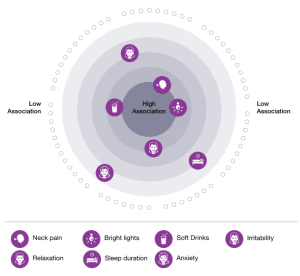
 Several years ago the story came out of a woman who had been suffering from monthly migraine attacks. At one point she was diagnosed with bilateral ocular hypertension, and started taking eye drops (a timolol maleate solution). She didn’t have another migraine attack – and
  But Teva is pushing ahead with a completely new medication, currently known by the catchy name TEV-48125. TEV-48125 is a monoclonal antibody that binds to calcitonin gene-related peptide (CGRP), one of many similar medications being tested now.