So, are you ready to fight migraine by “remote control”? Some people may have that chance within the next few weeks.
The device is called Nerivio Migra, a neuromodulation device, which stimulates nerves to fight migraine pain (read more details here – A “Smart” Non-Drug Arm Patch to Fight Migraine). It’s actually a patch which is attached to the upper arm.
Nerivio Migra is an abortive, meaning it is used when an attack hits, unlike some other devices that are used to prevent attacks. Back in the spring, the FDA approved the device for the United States, and the company (Theranica) is planning to have a limited release this year, with a wider release in 2020.
Trials are continuing to attempt to evaluate the value of the device for adolescents (if you’re in the USA, watch this Nerivio trial page and you might be able to participate).
As the product is closer to market, there is more information on Nerivio Migra, such as the instructional video below. For more information, be sure to visit the Theranica website.
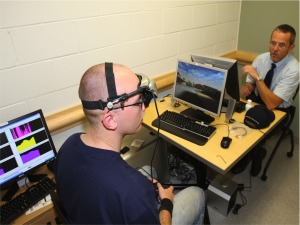
We have actually talked about biofeedback here frequently. Biofeedback is a treatment that helps the patient take control of some normally “involuntary” processes in the body, such as heart rate and breathing patterns. Sometimes this is done using technology, other times without.
Veterans Affairs is very interested in the headache field for obvious reasons. But in this case, the research was a little bit wider. They wanted to find out which conditions were effectively treated by biofeedback, according to previous clinical trials. A study like this involves searching for past trials, as well as evaluating whether or not the trials were done properly.
The study found that biofeedback was indeed effective for migraine and headache conditions (more on that in a moment), and also for incontinence (both urinary and fecal). For other conditions there was less evidence, however, that’s at least partly because not many studies have been done for many other conditions.
So what did the researchers find? Biofeedback was effective in treating both tension-type headache and migraine. Specific types of biofeedback were especially effective. EMG (electromyogram) in biofeedback is used for muscle function. Measuring and controlling skin temperature and blood pressure were also helpful for migraine and headache.
Biofeedback decreased frequency, duration, and intensity of attacks – a very encouraging result. Interestingly, the most evidence of all was that it helps with the frequency of headaches. Helping with the headache/migraine attacks themselves, biofeedback also helped fight related issues, such as muscle tension, anxiety, and depression. It also helped decrease medication use.
Biofeedback has always been one of the treatments with the most good evidence behind it. It’s non-invasive and doesn’t involve medication, making it excellent for anyone but an especially valuable choice for children and pregnant women, where more caution is required for many other treatments.
You might have been hearing about migraine patients who are finding relief with a relatively new technique called “dry needling”. Today we’re going to take a brief look at this treatment – how it’s done, and what it’s for.
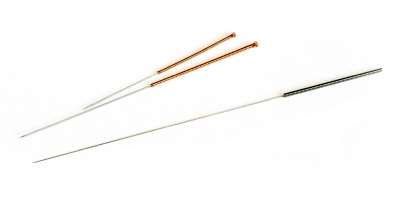
A “dry needle” is simply a needle with no fluid in it. In fact, a practitioner will probably use a solid needle – in other words, a needle that cannot deposit or remove fluids.
During treatment, needles will be inserted into various areas of the body for the treatment of pain. If this sounds like acupuncture, there are actually many similarities. In fact, acupuncture needles are sometimes used. But dry needling is actually different in many ways, with different goals.
And so, the needle goes into the muscle tissue, often with the goal of eliciting a “twitch response”.
It is difficult to describe dry needling in a short article, because, like many newer migraine treatments, it is done in many different ways. There is also very little regulation, which means that practitioners have a lot of freedom – but also no standardization. Little regulation can also mean the danger of someone who really doesn’t know what they’re doing – or even people who use needles that are contaminated.
However, dry needling is a generally safe treatment if you see a physical therapist who is trained in the technique. If possible, find a therapist who has experience with migraine patients. This is an excellent treatment to go to through word of mouth, although the search can be frustrating if there isn’t a good clinic offering dry needling in your area.
Is dry needling superior to other treatments that target trigger points? That is a matter of opinion. With such a new treatment, studies are limited.
Our community would be very interested to hear if you have had experience with dry needling for migraine or headache, so please leave a comment! Meanwhile, to learn more, check out:
Earlier this month in the USA, the FDA approved Emgality (galcanezumab) for use with episodic cluster headache. This is a big step for CGRP inhibitors, which have shown promise for treating both migraine and cluster (for example, see this article about Ajovy).
As the official Emgality site states:
For adults with episodic cluster headache: Emgality can help reduce the number of weekly cluster headache attacks that occur during a cycle
While most of the articles about the recent FDA approval point to the 8.7 fewer attacks per week during a cluster cycle, there is more to the story.
Patients experienced 8.7 fewer attacks, with only 5.2 fewer attacks with placebo. Significant enough to show that Emgality seems to be doing something, but by no means a silver bullet.
But that was in the middle of the trial, which was an 8 week trial. After two months, the difference between Emgality and placebo was even less – a difference which some say “is no longer statistically significant” (see Galcanezumab Offers Help for Cluster Headache and Migraine).
It is good news that cluster patients have something else to try – and we hope that Emgality will help some. But much more needs to be done to help cluster headaches. Sadly, this is only a small step toward better treatment.
Migraine symptoms are sometimes “endured” for months or years without serious focus on treatment. Many people are being told that migraine is “normal” and that they just have to “put up with it” and “take an aspirin” (not that aspirin is always a bad idea).
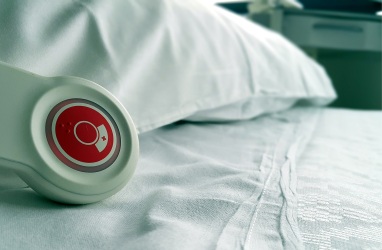
Aggressive migraine treatment often requires hospitalization…
There are other patients who have tried many treatments, and are still, or now, experiencing several headaches a week, or almost constant migraine symptoms. And so “aggressive” treatments are finally tried.
One such aggressive treatment is used for children and teens as well as adults who haven’t responded to many of the most effective drug or even surgical treatments. It’s intravenous dihydroergotamine (DHE) therapy.
This is a serious, aggressive therapy because it generally involves hospitalization. Patients are given DHE every few hours (perhaps 3 times a day).
In spite of the positive results, one of the biggest drawbacks to this treatment is that full hospitalization is very expensive.
But trying to take the treatment to the next level, some specialists in Kansas City are using what they call the “Comprehensive Aggressive Migraine Protocol”, or CAMP. This is a 5 day treatment protocol for 11-18 year old patients. CAMP aims to make two major improvements:
This is “outpatient” treatment, so full hospitalization is not required.
Instead of full focus on DHE, the DHE treatment is combined with other treatments, such as massage therapy, relaxation training, and aromatherapy.
This type of treatment may not only save money, but also save on the extra stress of full hospitalization, as well as the possible stress of having the full focus on the intravenous DHE treatments. Also , it helps the patents take control of their condition by learning techniques that they can use at home in the months ahead. Finally, it brings a number of treatments together, which could mean better long-term success.
CAMP was the focus of a recent study, and here are the results
On average, headache intensity declined by 58% over 5 days of treatment (P<.01). Headache frequency decreased by a mean of 1.5 days per week (p=.01) through 3-month follow-up, with a 27% reduction in the proportion of patients reporting a continuous headache (p<.01). There also was an average reduction of 76% in school days missed per month (p<.01) and significant reductions in indices of healthcare utilization (healthcare provider calls and ED visits) (p<.01).
One statistic alone – the 76% decrease in missed school days – should get our attention. That’s pretty significant.
Sometimes migraine does require “aggressive” treatment. This study reminds us that there are times when we should consciously take time out of “normal life” to really focus on serious treatment, because the benefits for ourselves and those we love in the months and years ahead can be very significant.
Aggressive treatment may take many forms, and one way specialists can help is by giving options to migraine patients – protocols of well-researched and carefully planned treatments, that can break the cycle of migraine symptoms.