
Treatments
Giveaway (and great gift idea): Lavender Gift Set
One of the most popular essential oils for migraine (or should I say anti-migriane) is lavender. I’ve always put it in my top 5 aromatherapy essential oils, and you may remember the surprising research on lavender we talked about in 2005.
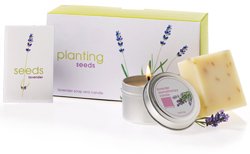 |
So I was delighted to hear about the giveaway – now in its final days – over at Somebody Heal Me. As you’ll see, the beautiful gift set includes a lavender candle, oatmeal lavender soap (I think I feel more relaxed just by typing that), and …. get this … a lavender seeds packet!
Now, I encourage you to head on over and enter the draw. But actually, I’m mentioning this for a couple other reasons. First, this is a great package that – admit it – you may just want to treat yourself with.
Second… it’s packaged up beautifully and would make a great gift to a friend who has migraine or chronic headaches. Or, someone who just likes that kind of thing.
Or… let’s get sneaky, and give it as a gift to someone else in our household… they use it, and we reap the aromatherapeutic benefits.
Good thinking, right? Hey, that’s why they pay me 60 minutes per hour to write here… 😉
Oh, I forgot to tell you the bonus. LATHER will donate $5 from the sale of each gift set to benefit the National Headache Foundation for headache awareness, education and outreach. Sounds like everybody wins to me…
Magnesium: Top of the List for Migraine
We’ve talked about magnesium for migraine a lot here, and we’re not going to stop because it’s something that actually helps a lot of people.
There have been quite the conversations going on here at Headache and Migraine News about magnesium, and I’m going to highlight one comment in a moment. But first, let me just point out that we’re not the only ones talking about this.
For example, in the journal American Family Physician, a peer reviewed journal from the American Academy of Family Physicians, an article was published this past July on the Therapeutic uses of magnesium. The summary stated (emphasis mine):
Magnesium is an essential mineral for optimal metabolic function. Research has shown that the mineral content of magnesium in food sources is declining, and that magnesium depletion has been detected in persons with some chronic diseases. This has led to an increased awareness of proper magnesium intake and its potential therapeutic role in a number of medical conditions. Studies have shown the effectiveness of magnesium in eclampsia and preeclampsia, arrhythmia, severe asthma, and migraine.
In The Clinical Journal of Pain, also this summer, Drs Sun-Edelstein and Mauskop wrote an article entitled Foods and supplements in the management of migraine headaches. In their list of supplements recommended for migraine, they put magnesium at the top of the list.
That means that a magnesium supplement should be one of the first things you’re considering if you have migraine. Now, check out this comment from Angie, one of our visitors from this month (paragraphs mine):
If you suffer from migraines and haven’t tried Magnesium PLEASE TRY IT!! I have had migraines since I was 6 years old. I am now 39. I have been on countless anti-depressants and anti-seizure type meds as preventatives…some worked – some did not, but all had some major side effects. If you’ve taken them, you know what I mean.
5 months ago, I started developing "stroke-like" right sided hemiplegia with my migraines and then subsequently "seizure-type" episodes. They were not strokes, as confirmed by an MRI and they were not seizures per se, as confirmed by an EEG….just all apart of my changing migraines. After a neurologist told me that I needed psychiatric help when I kept complaining about the side effects from the "newest" seizure med they had me on, I knew I was on my own.
A friend from work told me that her Dr had told her about a Magnesium/Riboflavin (B2) combo that seemed to be helping her, I felt like I had nothing to lose by giving it a try. IT WORKED! The Mag Oxide was not overly helpful, but the Mag Citrate made all the difference in the world.
I still get migraines, but they are functional migraines (worse around menses) – no nausea, no need to stay in a dark room, I can go to work, etc. But the hemiplegic and seizure type zone-out episodes are GONE completely. And I feel like I have my mind back – the fog that I had experienced while on Topamax and Zonisamide, etc has lifted. I CAN THINK AGAIN!!! I am going to try adding the CoQ10 and upping my Mag dose (I’m only doing 400mg) and see if that helps the menstrual headaches anymore.
I always thought vitamin "pushers" were just plain weird (sorry), but here I am telling you it’s working for me!! Good luck.
Now that’s just one experience of course, but it’s not an isolated one. Even down to the "ate" type of magnesium which I have recommended here in the past.
If you think it’s "weird" to take supplements for migraine, like Angie once thought, think again. This is a well researched, tried and true treatment.
Read more about taking magnesium for migraine here, and talk to your doctor. You can also read more about the also well researched magnesium, riboflavin, feverfew combination supplement MigreLief here. More about hemiplegic migraine here. Here’s the post with the ongoing discussion about magnesium and migraine.
References: Therapeutic uses of magnesium and Foods and supplements in the management of migraine headaches
New Botox Trials – Encouraging News on the bumpy road to acceptance
If you want your insurance to pay for Botox treatment for migraine, you should be encouraged by the report at last month’s International Headache Congress. Botox migraine treatment is continuing on the road to acceptance, but there’s no doubt it’s still a bumpy road.
The President-elect of the American Headache Society, Dr. David Dodick, gave the report on two trials of onabotulinumtoxinA (Botox), and there’s a lot for proponents of Botox treatment to celebrate.
First, these trials were very professionally done, a serious step toward Botox’ acceptance by the USA’s FDA. They were randomized, placebo-controlled, well balanced trials, the kind of trials that we need more of.
 |
As you may guess, the results were positive. Patients that received Botox had fewer headache and migraine days, fewer attacks, and significantly fewer actual hours of headache and migraine attacks. Overall, those taking Botox had less disability and functioned better than the placebo group.
This is the kind of evidence we’re looking for – proof that Botox is helping some people enough to be considered a valid migraine treatment.
But these trials are not telling us Botox is the miracle treatment we’ve all been waiting for – there are issues remaining. First, though there was a general improvement, Botox was certainly a long way from drastically cutting down on everyone’s symptoms. Of course, we wouldn’t expect that with most treatments – we know that few work with everyone. The Cochair at the session, Dr. Elizabeth Loder, pointed out one of the big issues with Botox – there’s still no easy way to predict who it will work with.
There’s still a lot of work to be done with Botox. How should it be administered? How much? When? Who does it work best with? Considering how far we still need to go answering these questions, we should be encouraged that we’re already seeing such good results in trials.
Another issue with these trials was that those taking Botox did not end up taking fewer other medications. This confirms what earlier studies have told us, and it will continue to be a concern to researchers – and to insurance companies. Can we get the overall cost down, while still improving people’s quality of life?
That being said, we did see that those on Botox took fewer triptan medications. So there are some interesting questions on this front that still need to be answered.
But let’s end on an encouraging note. This study did focus on a group that has a high need. These weren’t people who have an attack a year, but people who are disabled by moderate or severe attacks on average every week or more. They’re losing many hours a month to migraine. Many of them were, by typically accepted standards, taking too much medication (though they were off it at the time of the study).
There is hope then that Botox may give back many hours of life to people who are losing the most to migraine. And if doctors and insurance companies want proof that it works, well designed trials like this are giving them what they need. Doctors already using Botox treatment are convinced that it is significantly helping many.
The researchers hope to have approval of Botox treatment from the FDA for chronic migraine by the end of next year.
References:
Humanistic, utilization, and cost outcomes associated with the use of botulinum toxin for treatment of refractory migraine headaches in a managed care organization.
Botulinum Neurotoxin Reduces Headache Frequency and Disability in Chronic Migraine by Dr. Daniel M. Keller (report on this study) 16 Sep 2009
Botox is proven to help chronic migraine
1% Thursday – Aromatherapy: Try Something New
Try aromatherapy, or try a new essential oil, in a new way.
People use aromatherapy in many different ways. Some people like the scent during an attack, to soothe their senses. Some people like to use the essential oil in between attacks to keep the symptoms away.
There are also many different ways to diffuse the scent. Everyone has their favourite methods.
But do watch the difference between aromatherapy and aromachology – sometimes marketers use the term aromatherapy when they shouldn’t. Read more here about aromatherapy and aromachology.
To try a new scent, or get new ideas, start here. Or, leave a comment with your best tips!
What is 1% Thursday?
 |
Every Thursday at Headache and Migraine News (weather permitting) we’ll talk about one measurable, practical thing we can do to make our lives just 1% better. Usually it will be something very easy, sometimes it will be a challenge. Let us know if you try it, or share an idea of your own – and maybe a year from now we’ll see that things have really changed for the better!