A rare disorder could be causing your headaches – and it could be life-threatening.
Thick blood and headaches isn’t something we talk about a lot – and to be fair it is a pretty rare condition. But it’s another reason why any new symptoms should be taken very seriously.
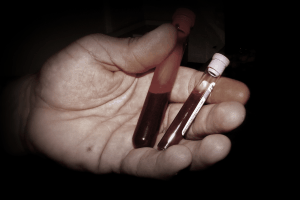
“Thick blood” is actually a condition known as polycythemia. There are different types of polycythemia. A mutation in a bone marrow cell may cause problems with red blood cell production – and your body starts making too many of certain red blood cells. Polycythemia may also come from other underlying conditions.
Why is thick blood so serious? Because the thick blood can lead to blood clots, which can lead to stroke and heart attack. It can also slow the flow of blood, meaning that oxygen isn’t getting distributed properly in the body. It can even lead to other diseases, in addition to the symptoms which we’ll talk about next.
Symptoms
Thick blood headaches go together, but the pattern is usually different in polycythemia than in conditions such as migraine.
Other symptoms include dizziness, trouble breathing, numbness or tingling, weakness, and fatigue. Your skin may get itchy (especially after a warm shower or bath), and you may feel bloated in you upper left abdomen.
Because of the lack of oxygen to the brain, thick blood may cause neurological symptoms, such as those we see in migraine. This could include vision problems, memory problems, loss of balance, or trouble speaking or understanding language.
The difference is that in polycythemia you’ll rarely get a repeating pattern – in other words, you won’t get repeated “attacks” when the same symptoms tend to occur.
The symptoms, although they may come and go, tend to appear gradually and get progressively worse.
Polycythemia is a chronic disease. There is no cure.
The Good News
The good news is that if you see a doctor, you should be able to get a clear diagnosis, and there is treatment. Just what kind of treatment you get and how well it works will depend on what type of polycythemia you have.
Once again, it’s very important to see a doctor if your symptoms change, or if you have new symptoms. If polycythemia is suspected, your doctor may refer you to a specialist.
References: