Yes, you heard right. The app will actually be the prescription. A digital prescription. Sort of.
This past week Click Therapeutics reached a milestone when the FDA approved their application for their digital app, currently known as CT-132. It’s an app specifically designed to treat migraine.
No, you don’t inject yourself with it or hold the phone close to your head to make it vibrate. It’s actually more about helping you with lifestyle changes. Yes, we’ve seen things like this before, but this is a specific app that has gone through clinical trials.
This isn’t Click Therapeutics’ first app. They already have an app available for major depressive disorder, known as Rejoyn. The official website explains: “Rejoyn, when used alongside your antidepressant medication, can help you treat depression symptoms differently. It is authorized by the FDA and provides 6 weeks of brain-training exercises and short skills-based therapy lessons.”
They also have an app for type 2 diabetes. And more to come, but the migraine one is coming soon.
We can expect to see more apps of this type coming.
One of the important measurements for an app of this kind is whether or not people will use it, and keep on using it. Only after that can we measure whether or not it’s helping. CT-132 seems to check both boxes, after a few weeks in the trials.
Of course, this is bit of a different kind of thing to test, when we compare it to taking a pill. But so far it does seem to help. But the real trial will come when it’s available and people in the real world start using it.
The Nerivio neuromodulation armband from Theranica is a migraine-fighting device that now has a few years of success under its belt. Currently, it’s an abortive, used to fight the migraine attack when it comes. But could it also be adapted as a preventative?
Research published in the journal Headache earlier this year suggests that it can. Participants used the Nerivio device every other day for eight weeks, and discovered that they had 4 fewer migraine days each month – a significant reduction, although of course this was only a short trial.
In the press release, the company gave a good summary of the device as it is today:
Nerivio is a novel, physician-prescribed treatment for migraine that is discreet and non-disruptive to everyday living. Controlled with a smartphone and self-administered, Nerivio wraps around the upper arm and uses non-painful remote electrical modulation (REN) to activate peripheral nerves, inducing the internal pain management mechanism called conditioned pain modulation (CPM) in remote body regions. In simpler terms, the upper arm is stimulated to control the migraine pain in the head. Each treatment lasts 45 minutes and is recommended for use every other day for prevention or at the start of a migraine attack for acute treatment.
If you’re looking to cut down on or even eliminate the drugs you’re taking now for migraine, this may be something to talk to your doctor about. It does need to be prescribed, but now many more patients may find it helpful.
For more about abortive migraine treatment and the real-world evidence behind it, check out this post from 2020 – Nerivio Device: New Approval and Real World Evidence. There’s lots of useful information on the official site (check out the FAQ): Nerivio
The story of acetaminophen/paracetamol, commonly associated with the brand name Tylenol, is a strange one. A researcher studying treatments for worms requested one chemical and received the wrong one. The worms didn’t mind it, but it did seem to fight fever.
It was in the late 1800s that acetaminophen was first used to fight fever and pain in Germany. But it was never widely used until it came to market in the USA and the United Kingdom in the 1950s.
As might be expected, a drug to treat pain and/or fever quickly became popular. Not only by itself, but in combination with other medications under numerous brand names. Few medications are taken with as much frequency as this one.
As is the case with many drugs, we’re not really sure how it works. The most common theory today is that it blocks COX (cyclooxygenase) enzymes in the brain, thus keeping pain signals from being transmitted. Read more from Tufts University School of Medicine: How Does Acetaminophen Work?
Being so common, problems started to arise with overdoses. It’s easy to take too much, or to take two products that contain paracetamol without carefully checking the labels. (By the way, unlike some “painkillers”, taking more of this one doesn’t increase its power – so never take more than the recommended amount thinking it will help you more.)
The “good” news may be that this may not be your best choice for headaches after all. Sure, if it works for the occasional tension-type headache, there may be no reason to change. But if you’re popping a pill every month, or every week, it’s time to talk to your doctor. But when it comes to other headache conditions such as migraine, there are so many better options that you may want to avoid acetaminophen altogether. SeeIs Acetaminophen/Paracetamol Really “Ineffective”?
Recent studies remind us of some key issues that we’ve talked about before:
Even “safe” medications should be used rarely, if possible. They all have risks.
You are an individual, and you need to find what works for you.
Lifestyle, such as regular movement and what you eat, are still king, and can never be replaced by a pill.
Read labels.
Getting headaches on a regular basis? Talk to a specialist. There are probably better treatments than over-the-counter painkillers.
Paracetamol is a unique drug with a strange history. It has helped many, but as our knowledge continues to expand, we may find that it has had its day. This will be an interesting story to keep watching.
Another drug recently approved for migraine treatment is Elyxyb. But this time, it’s a new formulation of an old medication. So what’s the story?
Many of our readers are probably aware of celecoxib, often sold under the brand name of Celebrex. If you’ve tried a lot of medications for migraine and certain other types of pain, it’s likely that you’ve been prescribed Celebrex somewhere along the journey.
Like ibuprofen (Advil) and many others, celecoxib is a type of nonsteroidal anti-inflammatory drug (NSAID). But every NSAID has its own pros and cons. You can read about some of the more common ones prescribed for headache, and how to decide on a dose, right here: NSAIDs – Which One Should I Take For Headache?
Celecoxib has already helped a lot of people as an abortive for headaches and migraine. Elyxyb contains celecoxib 120 mg/4.8 mL. It’s designed to be a one-shot migraine-fighter – just one dose to help stop the pain. In fact, you can’t take more than one dose in 24 hours.
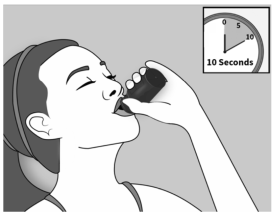
In this case, it’s a dose that you drink.
Although side effects are not common, like many NSAIDs there is the possibility of gastrointestinal issues, and a possible risk of cardiovascular issues. However, the official recommendation is that Elyxyb can be taken with or without food, making it convenient to take when the migraine attack begins.
The most common side effect (though still rare) is an altered sense of taste after taking the tablet – which most people will be willing to put up with if it stops the migraine attack.
As mentioned above, Elyxyb is taken in liquid form. It’s a special formulation that is intended to be very bioavailable – it gets into your system quickly to stop the pain as quickly as possible. This is a common goal of technology when it comes to migraine medication.
So that’s it – convenient and quick – an abortive drug to investigate if you haven’t found the more common ones to be effective at stopping your migraine attacks.
So, are you ready to fight migraine by “remote control”? Some people may have that chance within the next few weeks.
The device is called Nerivio Migra, a neuromodulation device, which stimulates nerves to fight migraine pain (read more details here – A “Smart” Non-Drug Arm Patch to Fight Migraine). It’s actually a patch which is attached to the upper arm.
Nerivio Migra is an abortive, meaning it is used when an attack hits, unlike some other devices that are used to prevent attacks. Back in the spring, the FDA approved the device for the United States, and the company (Theranica) is planning to have a limited release this year, with a wider release in 2020.
Trials are continuing to attempt to evaluate the value of the device for adolescents (if you’re in the USA, watch this Nerivio trial page and you might be able to participate).
As the product is closer to market, there is more information on Nerivio Migra, such as the instructional video below. For more information, be sure to visit the Theranica website.