
Nerve Blocks – Coming to an Emergency Department near You?
A report published in the journal Headache late last year is encouraging emergency departments to implement and even prioritize greater occipital nerve blocks for migraine patients. Will this treatment be coming to a hospital near you?
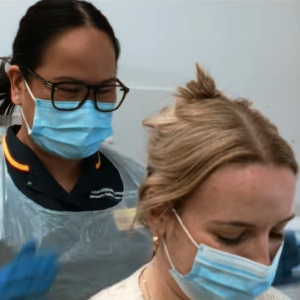
Greater occipital nerve blocks, in this study, involved injections in the back of the head using either bupivacaine or lidocaine. These are common local anaesthetics, but in this case they are used to fight all migraine headache pain quickly. Many patients are even headache free within half an hour. One of the study authors, Dr. Serena Orr, explains it this way:
The occipital nerves at the base of the skull bring in pain signals to the same area of the brain where pain signals from all over the head are coming in. By anesthetizing these nerves, patients get relief in two ways. First, the back of the head goes numb for several hours. Second, we see that pain signals more broadly from all over the head can be dampened down in the brain, given this shared area where pain signals come in for both occipital nerves and other nerves’ branches from the head.
Dr. Serena Orr (New guidelines for treating migraines in emergency departments)
Sounds great – so what’s stopping emergency departments from using this treatment?
First, new research is changing our understanding of which treatments work best. It takes time for policies and attitudes to change at the local level.
But secondly, this treatment requires special training and supplies. It’s not complicated, but it’s beyond just giving someone a medication.
This treatment may be used in the case of a severe or unusual migraine attack, or in the case of an attack that just isn’t going away after a few days. If you find yourself in emergency, it might be worth asking the health care workers about the availability of this treatment.
Note that although this is currently considered an excellent emergency treatment for some people, it is not the only treatment that may be or should be offered. There are other excellent treatments to be considered, as the study notes.
To see the study itself, go right here: 2025 guideline update to acute treatment of migraine for adults in the emergency department: The American Headache Society evidence assessment of parenteral pharmacotherapies
Below is a video showing how the procedure works in general (the video is general – it’s not specifically talking about emergency migraine treatment). You can also read more here: Occipital Nerve Block (Cleveland Clinic).