On the H1N1 flu – Live from Mexico City

As many of you know, I’ve been studying in Mexico, and so I now find myself in the middle of a major worldwide health news story – the influenza A (H1N1) outbreak (formerly known as the swine flu, with all due respect to the pork industry). 😉
As we all know, the flu is, indeed, headache related. Headache is one of the major symptoms. For those with migraine, migraine attacks may be triggered, turning even a mild flu bug into a perfect storm of pain.
A brief intro
There’s lots of good information out there on H1N1, but here’s a very quick intro. Certain animals can spread the flu to humans. People keeping pigs can get the flu, but the bug doesn’t usually spread from that person to another person. But when the virus mutates and starts to spread among human beings, that’s when the trouble starts.
Why it’s NOT serious … and IS serious …
I think this is the best way to look at this news story at this time. Is it serious? Yes – and no.
At this point, the numbers of people infected, even if they’re 10x what you’ve heard in the news, are quite low. So far, there haven’t been thousands of deaths, and we hope there won’t be. It’s very easy to be too frightened of your own imminent death (especially if you’re living in Mexico City!).
The deaths that we’ve heard about are tragedies. But we’re thankful that, so far, there haven’t been more.
However, here’s why it is serious.
A lot of it has to do with unknowns. Unknowns don’t make for good news headlines – rising numbers are much more exciting. But at this point we really don’t know what’s going to happen with this virus in the next few days and weeks. That’s what the experts are struggling to understand.
Will the virus mutate into a more dangerous form? Just how deadly is it now? How quickly will it spread? How is it different from other viruses?
And how will human bodies respond to it, bodies that have never been exposed to something similar?
So I think we need to be careful at either extreme. Saying it’s all over, and was a false alarm, would be premature. Saying it’s a lot of talk about nothing wouldn’t be taking it seriously enough. Living in fear isn’t necessary either.
I’ve also seen some horrendous reporting on this (not to paint all media with the same brush – some has been excellent, and has served a very useful purpose). I hope the media will be careful to use the numbers carefully and take a balanced approach.
For the latest news, visit the World Health Organization Influenza A(H1N1) page. If you’re concerned you may have H1N1, there is a very helpful symptoms page at the Mayo Clinic. You might also want to watch this interview on H1N1 with infectious disease specialist Dr. Gregory A. Poland.
I’m curious – what’s the feeling in Mexico City?
People are certainly concerned. Schools have been closed for a week now (though this was a long weekend anyway) and will be closed at least until the 6th. Many businesses have shut down.
On the other hand, in my corner of the city most stores remain open, so the streets are busy and people are out and about. Places where people gather – sit down restaurants, movie theatres, places of worship, and so on – are generally closed.
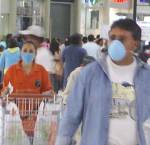 |
Many of you have seen people wearing masks here in Mexico. Some people do, some don’t. It’s not as unusual here as in other places. When someone gets a cold here, it’s not uncommon for them to wear a mask to protect others. Now, of course, more people are wearing them and the stores are sold out. 🙂
So life goes on, parents try to entertain their kids on the forced vacation/holiday, and everyone waits for the next bit of news…
What about the people you know? How are they feeling?