So, are you ready to fight migraine by “remote control”? Some people may have that chance within the next few weeks.
The device is called Nerivio Migra, a neuromodulation device, which stimulates nerves to fight migraine pain (read more details here – A “Smart” Non-Drug Arm Patch to Fight Migraine). It’s actually a patch which is attached to the upper arm.
Nerivio Migra is an abortive, meaning it is used when an attack hits, unlike some other devices that are used to prevent attacks. Back in the spring, the FDA approved the device for the United States, and the company (Theranica) is planning to have a limited release this year, with a wider release in 2020.
Trials are continuing to attempt to evaluate the value of the device for adolescents (if you’re in the USA, watch this Nerivio trial page and you might be able to participate).
As the product is closer to market, there is more information on Nerivio Migra, such as the instructional video below. For more information, be sure to visit the Theranica website.
Ok, when I say “probably”, what I’m really saying is that, according to one study, (slightly) more than half of headache specialists have migraine. So let’s delve into that a little bit.
This study comes out of Germany, and was published in the journal Cephalalgia. Researchers wanted to discover if the personal medical history of doctors was important – and it is.
It was the actual headache specialists who were most likely to have migraine. Next came general neurologists, and then pain specialists. General practitioners even had slightly more prevalence of migraine than the general population, but not much.
So why is this? Well, the study shows that many of the headache specialists went into the field in the first place at least in part due to their own migraine. I would like to add another suggestion that wasn’t mentioned in the abstract – I bet it’s also more likely that these specialists have a close family member with migraine. Due to the genetic aspect of migraine, there would be another link between their migraine and family migraine.
Now, the other main finding is even more surprising. The health professionals did actually have a different perspective on migraine, depending on whether or not they had it themselves. Well, I guess that’s not surprising. But, according to the study, doctors with migraine had a more “somatic view”.
A what? A somatic view – in other words, they were more focused on the biological issues rather than thinking about the social or psychological aspects.
But maybe this makes more sense than it does at first glance. Those who suffer from migraine themselves are less likely, perhaps, to say silly things like “It’s just stress” or “You need to stop being so intense”. They realize that this is a real biological issue, although of course it relates to the whole person.
Another interesting point – doctors were likely to recommend triptans to their patient, but probably weren’t taking them themselves (over 1/3 of doctors with migraine took them – but they almost all recommended them to their patients)! Why? It may be that, having lived with migraine and its treatments longer, they had generally moved beyond the “first line of defence” into other treatments. I’m not convinced that there’s a more suspicious reason. But it would be worth delving into.
Anyway, yes, if your specialist has migraine themselves, it does make a difference. I don’t think that this is a reason to only have doctors who themselves have suffered from migraine – that probably has its pros and cons. But it is nice, in some ways, to see so many working hard in this field who understand the pain that we’re going through.
Thanks so much for visiting! It’s good to see more people visiting in the past few weeks, which means more people who are empowered to fight back against migraine!
Here are the posts that were most-read over the past three months, with the most popular coming first. A wide variety of topics!
Watch for these Three Migraine Warning Signs – These are not signs that you may develop migraine later in life, but signs that a migraine is starting – and that a headache is likely to hit within 24 hours…
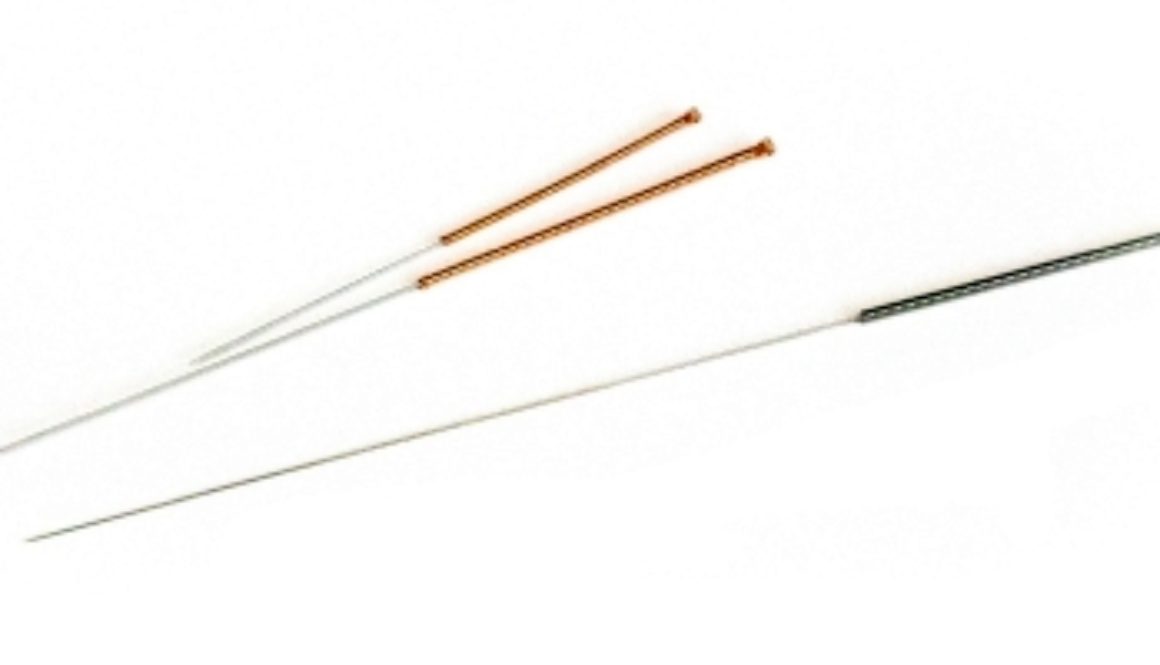
Dry Needling for Migraine – You might have been hearing about migraine patients who are finding relief with a relatively new technique called “dry needling”…
The Last Two Migraine Barometers – Last Chance! – For many years, one of the resources that we have provided has been the Migraine Barometer. We will no longer have them available – but there are two left! Read on…
Early Puberty, Sugar, and Migraine – Could sugar be triggering a chain-reaction that leads to early puberty – and migraine – in some girls? …
Men, Migraine, and Hormones – You don’t hear about it too often – but yes, men have issues with migraine and hormones too…
Migraine with aura actually refers to a whole set of clinically different types of migraine. It’s characterized by temporary symptoms such as seeing flashing lights or patterns (visual aura), or a feeling of “pins and needles”, numbness, or problems with speech. (Read more here – Migraine with aura)
So obviously experiencing or not experiencing aura means that the symptoms are somewhat different. But is migraine with aura actually a different disease? Should it be treated differently? Is it doing something different to your body than migraine without aura?
These are questions that doctors and researchers have been struggling with for many years. A new report in The Journal of Headache and Pain is helping to direct the discussion toward future research.
There is a lot of discussion about whether or not we should call migraine a “disease”, but researchers use the word “etiology”. That means, does migraine with aura have a different basis, a different cause. We don’t know what causes migraine, but we have clues.
There are hints that migraine with aura may have a different etiology, but we don’t know for sure. As we’ll see below, it does sometimes respond differently to treatment, and it can affect the body in different ways. Is it just a variation of migraine? Or is it really different?
And this is complicated by the fact that many people experience both migraine with and without aura.
Should treatment be different for Migraine with Aura?
Generally speaking, there has not been a different treatment regimen for migraine with aura. And with good reason – most studies show similar results for both. However, there are some exceptions.
For example, magnesium may work better for those who have aura. Botox may be another example.
A rather interesting example was tonabersat. Don’t feel bad if you haven’t heard of it. It’s a “gap-junction modulator” that actually inhibits the cortical spreading depression in the brain which happens during a migraine attack – and which seems to directly influence aura. In trials, tonabersat at first didn’t seem very effective – until patients with migraine with aura were separated out. Then it was shown that it seems to help only patients with aura.
So if we target the cortical spreading depression (CSD), would that stop the attack in patients with this type of migraine? Well, the jury is still out. We often talk about migraine as a “chain reaction” here, but we’re still not sure if the CSD is just a link in the chain, or if it’s more part of a “web” of biological changes.
However, the study of tonabersat may give us new insights into how migraine should be treated.
Does Migraine with Aura affect the Body differently?
Yes, it seems to. Although other types of migraine may raise your risk of cardiovascular problems (think heart attack, stroke, etc), migraine with aura does seem to uniquely increase your risk of ischemic stroke in particular. There may also be differences in blood flow and the effect on the brain itself.
In many trials, migraine with aura was also more difficult to treat – it simply didn’t respond as well to typical treatments.
Interestingly, one study showed that women with migraine with aura are more likely to suffer from anxiety and depression, compared to those with other types of migraine.
Conclusion
Researchers want to see more studies on targeting migraine aura itself. They also feel that it would be worth it to differentiate more between the two major types of migraine in studies, so that more information can be gathered.
At this point, very little is understood about the difference between types of migraine, other than the differing symptoms. However, it is clear that there are differences beyond symptoms – migraine with aura may be harder to treat, may respond better (or worse) to individual treatments, and does seem to change the brain and body in some different ways.
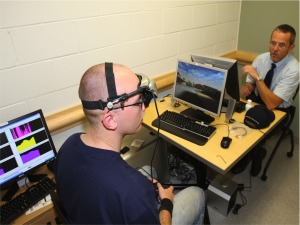
We have actually talked about biofeedback here frequently. Biofeedback is a treatment that helps the patient take control of some normally “involuntary” processes in the body, such as heart rate and breathing patterns. Sometimes this is done using technology, other times without.
Veterans Affairs is very interested in the headache field for obvious reasons. But in this case, the research was a little bit wider. They wanted to find out which conditions were effectively treated by biofeedback, according to previous clinical trials. A study like this involves searching for past trials, as well as evaluating whether or not the trials were done properly.
The study found that biofeedback was indeed effective for migraine and headache conditions (more on that in a moment), and also for incontinence (both urinary and fecal). For other conditions there was less evidence, however, that’s at least partly because not many studies have been done for many other conditions.
So what did the researchers find? Biofeedback was effective in treating both tension-type headache and migraine. Specific types of biofeedback were especially effective. EMG (electromyogram) in biofeedback is used for muscle function. Measuring and controlling skin temperature and blood pressure were also helpful for migraine and headache.
Biofeedback decreased frequency, duration, and intensity of attacks – a very encouraging result. Interestingly, the most evidence of all was that it helps with the frequency of headaches. Helping with the headache/migraine attacks themselves, biofeedback also helped fight related issues, such as muscle tension, anxiety, and depression. It also helped decrease medication use.
Biofeedback has always been one of the treatments with the most good evidence behind it. It’s non-invasive and doesn’t involve medication, making it excellent for anyone but an especially valuable choice for children and pregnant women, where more caution is required for many other treatments.