Cooling technologies have long been used successfully in migraine and other conditions. In fact, cryotherapy – the use of freezing temperatures in medicine – is an extremely common method of pain relief. And maybe it needs to be more common in migraine pain relief.
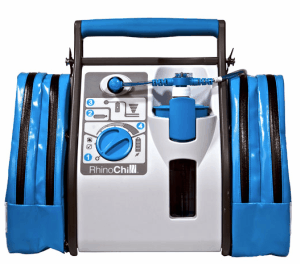
The RhinoChill device
RhinoChill is a device used to protect the brain during cardiac arrest. The concept is simple – by quickly cooling the brain a few degrees, the brain may be more able to recover once the heart gets pumping again.
The debate over the benefits of this treatment aside, the RhinoChill method of cooling may be just what the doctor ordered for some migraine patients.
Using the device, a special coolant is delivered to the nasal cavity (via tubes) at room temperature. The coolant then quickly evaporates, causing a cooling effect. The brain and body are cooled directly, but also indirectly as cooled blood circulates.
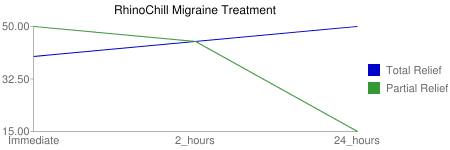
It may seem intuitive that some quick cooling could help with migraine symptoms, but a test was needed in the real world. A small trial has been done, with 20 treatments done for 15 patients. Out of those 20 treatments, 90% resulted in at least partial relief – 40% resulted in full, immediate relief. 2 hours later, 45% had complete relief and 45% had partial relief. 24 hours later, 50% had complete relief, 15% had partial relief.
Remember, that was after just one treatment. So it may be that for some patients the treatment may need to be repeated.
The treatment was well-tolerated, and at the end of the day a help to 87% of the patients in the trial. Although the authors note the the placebo effect may have been a factor, the success rate was high enough to show that this is another non-drug treatment that deserves further attention and study.
Other “cooling” treatments are common, including, for example, the SootheAway device, already used by migraine patients. But for a non-invasive, non-drug treatment, it’s worth the time to consider more alternatives as other technologies are developed.
Whether you’re suffering from a lumbar puncture headache, or you just want to avoid one, this article will help you find the solution. First, let’s take a brief look at why these headaches happen in the first place.
Cerebrospinal fluid (CSP) is a clear liquid that surrounds the brain and spinal cord. It acts in part as a cushion of protection. The body keeps your CSP at a certain pressure.
When this pressure is too high or too low, headaches may warn you of the problem. A number of things might cause the pressure to change, but we won’t get into all of those here.
Courtesy Blausen.com staff. “Blausen gallery 2014“. Wikiversity Journal of MedicineA lumbar puncture, also known as a spinal tap, is often performed in order to get a sample of the cerebrospinal fluid or measure pressure. A needle is inserted into the lower back, between two vertebrae, and the fluid is removed. The same can be used to help diagnose serious infections, cancers and other conditions.
Your doctor may also perform a lumbar puncture in order to inject medicine.
The lumbar puncture itself shouldn’t lead to a significant headache. The problem comes when there is leakage of the CSP after the procedure, leading to an unexpected drop in pressure. The headache that often results is known as a post-dural puncture headache (and in the past has also been called a post-lumbar puncture headache or just lumbar puncture headache).
Incidentally, even an epidural anesthesia can lead to this type of headache. It shouldn’t, but at times the membrane containing the CSP is punctured unintentionally.
Risks, and Avoiding the Lumbar Puncture Headache
The headache is more common in women between 31 and 50 years (older sources indicate a higher risk for young adults – check your sources for more information), and the risk increases if they’ve had the post-dural puncture headache in the past. A small body mass also increases your risk.
The best thing to do to lower your risk is to see a doctor who has experience doing the procedure. Details such as the way the procedure is done and the type of needle used may affect the outcome. Feel free to ask your doctor about these things.
When the Headache Comes
To be diagnosed with a post-dural puncture headache, your headache symptoms must begin within 5 days of the procedure.
One clue to the source of this headache may be that it gets worse when you sit or stand, but gets better when you lie down. This is only a clue – but it isn’t always the case. If that is your experience, it will help your doctor to rule out other possible causes.
It is possible that a headache will start more than 5 days after the lumbar puncture, but you may not get the same diagnosis in that case. There are several related headache types that are very similar.
These headaches may last for a few days, or continue for weeks.
Symptoms often include a stiff neck and even some trouble hearing.
Treatment
For some immediate relief, try lying on your back. If the case isn’t too severe, your doctor may recommend over the counter medication to help with the pain. Most of these headaches should go away without the need of any further treatment.
If you’ve had three days of pain and it’s still going strong, your doctor will probably recommend further treatment. However, do tell your doctor right away if you have a new headache – depending on your situation, some treatments are recommended to be done within the first 24 hours.
A clever procedure known as an epidural blood patch is quite common. A small amount of your blood will be injected to seal the leak with a a blood clot. The pressure should soon be restored, and your headache symptoms will go away.
There are several other treatments that may be tried, whether to quickly seal the leak or to diminish the lumbar puncture headache pain while the problem resolves on its own. If the normal treatments do not work, surgery may be required.
Final notes
Again, the lumbar puncture headache (officially known as a post-dural puncture headache) is only one of the headaches caused by low CSP pressure. The timing of the headaches and the studies your doctor may call for may vary, but the overall idea is similar.
If you’re prone to these headaches, it may be something you need to plan for for the few days after your procedure. However, if possible you should talk to your doctor before the procedure is done about the risks, and see your doctor right away if any headache symptoms develop. If you live with a headache like this for too long, it could end up being a very serious or even fatal condition.
But for most people who are under a doctor’s care, the condition is temporary and will not require any risky treatments.
Is the promise of tiny – high tech – wireless – customized migraine treatment finally coming true? A firm in Fort Lauderdale, USA, thinks that its time has come.
The device, being developed by StimRelieve, is specifically designed for chronic migraine. It’s an implanted device that applies nerve stimulation (occipital or supraorbital).
This in itself isn’t unusual – there are other implanted treatments for migraine which have helped quite a few patients. But the big thing about StimRelieve’s device is that it’s small – very small.
In fact, it’s 95% smaller than anything else out there for migraine.
That means that the device can be implanted using a needle (a standard gauge needle), instead of requiring surgery. Incredible.
How is this achieved? The wireless technology is key here. The implant has a wireless power source (the current plan is that it will be worn behind the ear).
In mid December, the FDA gave StimRelieve the go ahead with a clinical trial. The trial will aim for at least a 30% reduction in migraine symptoms at the 3 month mark. Remember, this type of treatment will be especially for patients with constant migraine attacks who have not been helped by other common treatments.
Now, imagine taking the wireless factor one step further. Imagine that this device could be controlled by your smartphone, allowing you to customize your treatment exactly as you need it.
StimRelieve is just one of a family of micro stimulators that is being developed. An iOS app has already been developed for at least one of these devices.
This could be a big step forward in treatment for those with constant attacks that are not finding help.
Is daith piercing something that you should try as a migraine treatment? Many people are saying yes.
Back in to 2015, a post I wrote criticized articles that touted the benefits of daith piercing, even though they cited little to no evidence. As a result, a huge discussing has started about the benefits and evidence behind daith piercing.
Photo courtesy MreeowSo we’re going to investigate daith piercing for migraine, on an ongoing basis, with your help.
I’m starting off with some of the information shared in the comments on the original post.
Richard pointed us to a YouTube series about daith piercing for migraine from Tanya Welch. See those here: Daith piercing and migraines
Danny Buchta, who does piercings, wrote: I have done this piercing for about 50 migraine sufferers in the past two months and all but one have found total relief in the short term and that one still said her migraines have been reduced.
Stephen Stratton has offered to watch the situation closely: Hi guys , I’m from England and came across this thread when searching for related articles, I am a qualified nurse and have a degree in Health Studies, I am also a Body Piercer, over the past few months I have had an increasing amount of migraine sufferer’s contact me for the Daith Piercing as a possibility that it may reduce the frequency or severity of their migraines, as with many comments in this thread, when all else fails … I am now intrigued by the possibility if any casual link, research is virtually non existent and so I have decided to conduct, hopefully, a study – its very early days yet , through social media I have requested that sufferers contact me for the piercing and I will over the next two years monitor any results, if anyone has any information or suggestions that may help me form a sound study, then please get in touch – thank you – steve (migrainestudy@mail.com)
This from Amanda: I was a migraine sufferer, constantly having migraines everyday for months at a time. If the weather became cloudy I was hurting. I heard about this piercing and decided a $30 piercing that WAS NOT PERMANENT was well worth the trial after so many meds and hospital visit. It has now been one full month and the only way I can tell when its gonna rain is because of my ankle, not my head any longer. Yes one full month no migraines, it feels amazing to wake up with no pain, I was one willing to try anything…the piercings don’t look too bad and definitely was well worth the $30. If you are suffering and willing to try something that can be undone then by all means try this it helped me
Emily wrote: Hi! I wanted to write and tell you my personal experience. I get migraine headaches. I was in the emergency room once a week for headaches so debilitating I could not even speak. I got my daith pierced because $40 is less than my copay. I am about four months post piercing and have not suffered a migraine since. I do get headaches occasionally but pulling on the ring and massaging the area helps to calm it down and gets it to go away within minutes…
This from body art tatoos: I have been doing body piercings for over 23 years, I have recently had a increase in the daith piercing ( migraine piercing ). I have been asking customers to keep me informed on there progress, 8 out of 10 customers after one month claim they still are migraine free, several are local nurses that there doctors suggested for the to try it, and so far has worked on most, most have been women and said the pain is very little, and it is a harder piercing to take care of because that part of the ear collects dirt much more than the rest so keep it clean, we have noticed that you must Pierce the side the migraine starts on, but if your migraine starts in the back or front of the head in the center it’s best to Pierce both sides, last week I pierced both sides of one of my tattoo artist daiths for his migraine and to his surprise his migraine went away on the spot, but since then he has only had one small headache that didn’t require him to take medication , so far so good, but like I said in the being it seems to work only for about 80 percent of people who get it done, 10 percent claims of a decrease in pain and other 10 percent claims did not work for them, good luck to those who choose to try it.
This is a representative list – there were a few who said the piercing didn’t help (in one case made things worse), but in most cases the reports were positive.
Your Turn
If you have a story, positive or negative, please share it. If you are aware of any trials, or any doctors who have been reporting on patients who have had daith piercings, please share that as well.
Hydrotherapy is actually a well known treatment among migraine experts. However, nailing down just what it is and how to do it can be difficult.
What is hydrotherapy? Actually, the word is used in some very different ways, so beware if you’re reading about a precise treatment which claims to be “THE” hydrotherapy.
Hydrotherapy is therapy with water. Now, most commonly in medical research, this refers to something that includes some kind of exercise. For example, someone who has trouble exercising due to an injury may find it easier to do more movement in a pool. This is also known as aquatherapy.
But hydrotherapy also refers to other aspects of water – cold and heat, minerals in the water, movement of the water (for example, a whirlpool). Sometimes even using a wet towel and your feet in a bowl may be called hydrotherapy.
Hydrotherapy has been studied in clinical trials, but it’s very difficult to study well because there are so many possible variations.
The basic consensus at the moment seems to be that hydrotherapy works, there’s good scientific evidence that it can help you. But we may not be able to tell you exactly what to do for your condition, especially if it’s headache or migraine.
Migraine therapy, including hydrotherapy, has often focused on heat and cold. Depending on how you use it, heat and cold may be beneficial or actually make symptoms worse – which means you may need to do some experimenting.
One study on hydrotherapy and migraine suggested warm arm and foot baths, combined with ice massage for the head, improved quality of life when combined with drug treatment (in other words, it was better than the drug treatment alone). (Here’s some helpful information on ice massage)
Many people recommend hydrotherapy with heat (for example, a warm bath) combined with massage, even if it’s self-massage.
A warm bath is often recommended. However, even a warm bath could trigger or increase symptoms for a migraine patient.
This is an excellent article about how to take a warm bath that actually helps – it has some great tips that should give you the maximum benefit, turning a bath into a migraine fighter: A Better Hot Bath
Other variations of hydrotherapy include:
Run cold water over the back of the head for three minutes at the first sign of headache.
Hot foot bath with an ice pack on the back of the neck
Gentle exercise in a whirlpool.
Common tips include drinking lots of water, keeping your head cool, and combining any hydrotherapy with massage, pressure point therapy, or stretching.
What types of hydrotherapy have you tried that have helped the most? Do you use hydrotherapy to ease symptoms, or have you found it a useful preventative?

 Remember, that was after just one treatment. So it may be that for some patients the treatment may need to be repeated.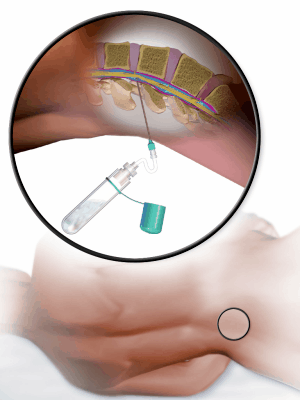
 The device, being developed by StimRelieve, is specifically designed for chronic migraine. It’s an implanted device that applies nerve stimulation (occipital or supraorbital).
 But hydrotherapy also refers to other aspects of water – cold and heat, minerals in the water, movement of the water (for example, a whirlpool). Sometimes even using a wet towel and your feet in a bowl may be called hydrotherapy.