
Migraine Experts Remain Skeptical of Acupuncture
A report last year suggesting that the benefits from acupuncture “persist” long term has led to some interesting discussion among migraine experts. An interesting theme of their comments – they might recommend acupuncture, but they’re still skeptical.
 Many migraine clinics and professionals seem reluctant to speak out against acupuncture. Part of the reason is that they see few or no side effects, which is a good start. But acupuncture is also very heavily promoted, and many patients swear by it and would not appreciate hearing anything against it.
The study released in October (The persistence of the effects of acupuncture after a course of treatment: a meta-analysis of patients with chronic pain.) drew on earlier studies. However, as has been noted again and again, these studies are not as reliable as many of the medical trials we’re familiar with.
Dr. Richard Lipton pointed out once again that “blinding” is difficult – in other words, how do you make someone “think” they’re receiving acupuncture when they’re not (an important part of blind clinical trials). One of the most often cited trials showing benefit from acupuncture for migraine did use “fake” acupuncture, but concluded that Treatment outcomes for migraine do not differ between patients treated with sham acupuncture, verum acupuncture, or standard therapy. In other words, just stick the needles anywhere.
Long term studies of acupuncture for migraine remain nonexistent. Dr. Dawn C. Buse notes that some studies may simply reflect that patients who apparently benefit from acupuncture are actually more self sufficient and willing to try new treatments – in other words, it’s not the acupuncture, it’s the overall way of life.
But if some studies seem to show that acupuncture may compare to more traditional treatment, why doesn’t everyone use it?
Some of the reasons include:
- Poor clinical trials (as mentioned above), or trials with mixed results, and therefore a lack of confidence in the results.
- Emphasis on a combination of treatments. Most specialists are positive about complimentary treatments, but most of these treatments work best along with more traditional treatments. Acupuncture isn’t the cure.
- Many other good options. Although acupuncture tends to get a lot of press, there are many, many non-traditional and complimentary treatments available. Many specialists simply put acupuncture further down the list, feeling that there are better options.
- Expense and time commitment. Even Dr. Alexander Mauskop, who is a licensed acupuncturist, admits to treating very few patients with acupuncture. For one thing, acupuncture is not likely to be covered by insurance. And it takes time – one of the cited studies, for example, had patients in for acupuncture 5 times a week. If you need to go 5 times a week, to actually get a benefit, would you do it?
Between studies with mixed results, time and expense, and many other and often better options, many specialist would agree with Dr. Deborah I. Friedman: “In general, I don’t discourage it, but I rarely suggest it …”
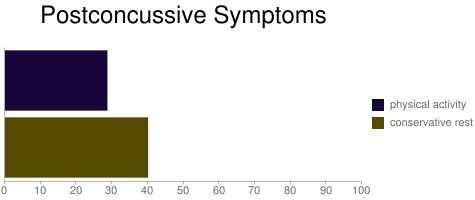 As you can see from the chart, those who went back to physical activity within 7 days were significantly less likely to have the unwanted symptoms.
 One interesting connection between migraine and epilepsy is the “cortical spreading depression” (CSD). CSD is a kind of electrical storm that passes through the brain of a migraine patient. It’s also been observed after a traumatic brain injury, and in patients with malignant strokes.
 For example, a study published last month in the American Journal of Medicine researched data on women who were evaluated for ischemic heart disease (“hardening of the arteries”). Of those women, anyone who had reported a history of migraine was at a higher risk of a “cardiovascular event” such as stroke or heart failure. (Study abstract:
  The researchers started with a database of millions of compounds that interact with this calcium channel. Then they started narrowing things down. Would this compound do what we want? Would it likely cause major side effects? Is it even available? If available, is it too expensive to manufacture? And so on, and so on.