Last month the announcement was made that gammaCore, a non-invasive vagus nerve stimulation (nVNS), was approved by the FDA for the treatment of episodic cluster headache.
We’ve been watching the development of gammaCore for the last few years. It’s already been approved in quite a few countries around the world, but this is the first approval in the United States.
This device has shown promise not only in the treatment of cluster headache, but also migraine. Although this recent approval was for episodic cluster, there is some evidence that vagus nerve stimulation may help patients with chronic cluster and chronic migraine.
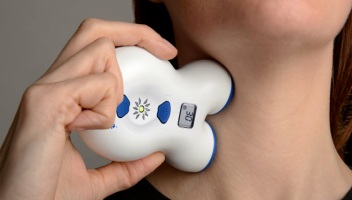
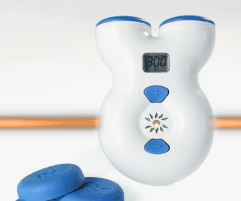
This particular device is used directly by patients, and is hand-held – small enough to carry along. It’s non-invasive and painless – simply held against your neck for 90 seconds. Using the gammaCore deviceIf you would to see a video showing exactly how gammaCore is used, see More Research on Vagus Nerve Stimulation (and a video).
At the time of writing this post, this device is not yet available in the United States. However, you can check out the gammaCore US website for updates.
Meanwhile, here is a video from a chronic cluster headache sufferer (he also suffers from SUNCT), explaining how he has found gammaCore helpful.
As with any type of pain, the agony of this super-intense headache raises the question – what exactly are cluster headaches causes? In other words, why am I in such incredible pain?
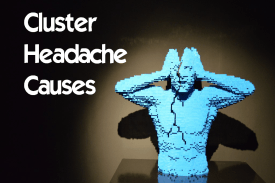
Based on this image from Matt BrownThere are actually two questions to ask. First, what may actually trigger a cluster headache attack at a certain time? But the other question is – why is it that a certain trigger results in a headache for one person, but not another? In other words, what is the cause of the disease in the first place?
But before we get into cluster headaches causes, make sure you understand what cluster is. Here is a handy infographic contrasting migraine with cluster: cluster headache vs migraine
So why does one person get cluster headache attacks, while another person doesn’t?
There has been some research done into the possibility of a genetic cause, or at least genetic factors that contribute. For many years now, researchers have recognized that family members of a cluster patient are more likely to have cluster themselves. In late 2016, a study from Italy was published in the Journal of Headache and Pain, indicating some possible genetic variants that seem to increase a patient’s risk (A genome-wide analysis in cluster headache points to neprilysin and PACAP receptor gene variants.).
Most often when we talk about cluster headaches causes, we end up discussing the brain and nervous system. We know, through modern imagine techniques, that the hypothalamus is involved, as has long been suspected. The trigeminal nerve in the head seems to be important, especially in the process that causes symptoms such as eye pain, tears and congestion. Other possible indirect cluster headache causes are related to a nerve cluster behind the nose (the sphenopalatine ganglion), histamine, and the blood vessels themselves. Read more about these factors here: What is behind the dreaded Cluster Headache?
All that being said, there is still nothing we can point to with certainty. Cluster may indeed be caused by a number of factors working together – for example, even someone who is predisposed genetically may not get cluster because other physical factors are lacking. There are other behavioural factors, such as a history of smoking, which seem to play a role.
But what actually kicks off a cluster headache attack (or, what triggers a cluster period)?
Cluster isn’t as closely connected to “triggers”, such as food or hormonal changes, as migraine is. There are some factors which have been related to periods of cluster headache attacks, including smoking, sleep apnea, and the season of the year (autumn being the highest risk time of year).
Once the cycle has started, there may be other individual cluster headache causes. Alcohol is commonly reported, as well as strong chemical fumes. A hot day, or getting “overheated” during exercise seems to trigger attacks for some. However, when you’re not in a “cluster period”, these things will not trigger attacks at all.
Cluster is hard to research because it is so rare. However, we are learning more and more about the brain, and the last 30 years has brought us incredible advances in understanding. Many of these new revelations about cluster headache causes have brought new treatments to the forefront, such as deep brain stimulation for chronic cluster headache patients.
For the last few years we’ve been watching the race to get CGRP inhibitors on the market for migraine prevention. Well, you could be seeing those drugs approved as early as next year. What’s the latest?
First, if you need to review exactly what CGRP inhibitors are, check out The Secret of CGRP.
Leading the pack at the moment is erenumab, also known as AMG 334. In September, the report said that 70mg of erenumab, delivered by injection, had almost 3 fewer days of migraine attacks per month. These are episodic migraine sufferers who originally had between 4 and 14 migraine days per month. That means that if you could have about 30% fewer attacks, and side effects seem to be few.
Erenumab now moves into the second part of the trial, testing different dosages over 24 weeks.
Also in Phase III trials is galcanezumab, also known as LY2951742. Galcanezumab also had statistically significant results in previous trials, with a once-a-month injection, and participants are currently being recruited for new trials – those with chronic and episodic migraine, and those with chronic and episodic cluster headache – for more information visit ClinicalTrials.gov.
A little further behind, but possibly the one to watch in 2018, is TEV-48125. A once-monthly injection at various doses was tried, and as early as 3 days into the treatment patients had positive results. Studies continue for both chronic and episodic migraine.
Finally, let’s not leave out ALD403. ALD403 is well on its way for treatment of episodic and chronic migraine, though the episodic migraine trials are further along.
Many patients taking ALD403 in trials actually experienced a complete remission of migraine, and others a significant decrease. Trials continue.
These are just tidbits of information about the trials, and they really can’t be compared at this point, even if we did have all trial data. The point is that these still look like solid options to prevent episodic and chronic migraine, and even cluster. Some if not all of these should roll out over the next 2-3 years, and by that time we’ll know them better.
If you could get rid of just one day of migraine agony, would you? Of course you would. But what’s the best way to do it?
One of the new treatments for migraine that is being developed, and even used today, is vagus nerve stimulation.
Now this type of treatment has actually been around for a while. A device is implanted that stimulates the vagus nerve, which runs on two sides of the body from your brain stem through your neck, chest, and abdomen. This type of treatment is used for hard-to-treat cases of epilepsy and depression.
But the latest thing is non-invasive vagus nerve stimulation, which means no surgery, and no implants.
A company known as gammaCore has developed such a device, which is already sold in Europe and Canada, though not yet approved in the United States.
So far, the device has certainly helped people with both migraine and cluster headache. And the bonus is that the treatment is very well tolerated, with few side effects. Plus, it takes less than 2 minutes to use.
A new study of the device showed some improvement in patients (see Chronic migraine headache prevention with noninvasive vagus nerve stimulation). After 2 months, almost 10% of the patients had a 50% treatment response. They basically had a day or two that were migraine-free, which otherwise would not have been. (These were patients chronic migraine, so originally they had at least 15 days with migraine attacks per month, some with attacks almost every day)
The interesting thing about this study was that patients continued to improve over 8 months. After 6 months, patients had 6-7 more days symptom-free. And after 8 months, 7-8. Would the improvement continue? It looks like it might.
So researchers are preparing for longer and better trials.
To see what using the device is like, take a look at this video:
Although cluster headache usually starts in your 20s or 30s, children can, and do, get cluster too. Usually the symptoms start after the age of 10, but children with cluster have been reported as young as 6 years old.
The fact that cluster headache is extremely rare in children is no comfort to children who get it and their families who are trying to help them. Although we’ve talked about cluster headache in children before, it’s time for an update.
As with adult cluster, more males are diagnosed than females. However, a surprising number of girls get cluster as well.
But one of the biggest challenges is diagnosis. A study in 2009 of eleven children found that, on average, their symptoms began at the age of 8.5, but they went two years without a proper diagnosis.
Sadly, headaches in children are often considered to be caused by “stress” or “attitude”. However, a specialist who know what questions to ask can get to the truth a lot faster.
Another challenge is that cluster headache is not usually constant. Attacks typically last from 15 minutes to three hours. But they also go into remission. Headaches may occur once or several times a day for a while, and then disappear for months or years.
Symptoms in children tend to be similar to those in adults. That would include agitation and restless movement, one sided pain, congestion, and facial flushing and sweating. (For more detail, see Cluster Headache Symptoms)
Treatments for cluster are also similar to treatments in adults, partly because precious little study has been done specifically for children. One study found that oxygen, methysergide, verapamil, zolmitriptan and dihydroergotamine were particularly helpful for children, but that paracetamol/acetaminophen, ibuprofen and codeine with paracetamol/acetaminophen were not particularly helpful.


 Leading the pack at the moment is erenumab, also known as AMG 334. In September, the report said that 70mg of erenumab, delivered by injection, had almost 3 fewer days of migraine attacks per month. These are episodic migraine sufferers who originally had between 4 and 14 migraine days per month. That means that if you could have about 30% fewer attacks, and side effects seem to be few.
 Now this type of treatment has actually been around for a while. A device is implanted that stimulates the vagus nerve, which runs on two sides of the body from your brain stem through your neck, chest, and abdomen. This type of treatment is used for hard-to-treat cases of epilepsy and depression.
 The fact that cluster headache is extremely rare in children is no comfort to children who get it and their families who are trying to help them. Although