
Can I be Migraine-Free and still eat Cheese?
Cheese seems to be pretty high up on the list of foods to avoid when you’re a migraine patient. But as with anything related to migraine, it ain’t so simple.
First of all, my list isn’t your list. Just because cheese triggers and attack in Josh, there’s no proof that it may trigger an attack in Ashley.
The common theory when it comes to cheese is that it contains tyramine, an organic compound in a lot of foods that may trigger migraine attacks. Many migraine patients have tried a low-tyramine diet, and many have been helped by it.
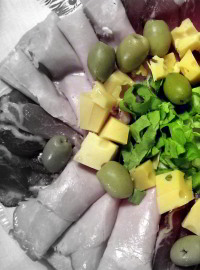 |
But here’s the catch – some cheeses are super-high in tyramine, others are not. Don’t just "avoid cheese" – there are many cheeses that may not bother you at all. (Of course, if you’re avoiding dairy altogether, skip the rest of this article and read this.)
Worst Offenders
The cheeses that are aged tend to be the worst offenders. From What Your Doctor May NOT Tell You About Migraines, here is a list of the common cheeses that are high tyramine, the worst first:
- English Stilton
- Blue cheese
- Sharp (old) Cheddar
- Danish blue
- Mozzarella
- Swiss Gruyère
- Feta
- Parmesan
- Gorgonzola
Others that are often listed are Boursault, Boursin, Brie, Colby, Emmenthaler, Camembert, Gouda, Muenster, Provolone, Romano, Roquefort, and Swiss.
Now, there’s a bit of a fight over whether or not mozzarella should be on the list – particularly because people love their pizza. So we’ll talk more about mozza in a moment.
Safer Cheeses
So, did the list above seem kind of long? In the book Heal Your Headache, Dr. Buchholz offers this list of cheeses that are fairly low in tyramine.
- Cottage cheese
- Ricotta
- Cream Cheese
- (good quality) American cheese
The key here is fresh – young cheeses tend to have less tyramine. Go to your local cheese shop and see what fresh cheeses they offer – you might find a new love. You also might get away with some processed cheeses, such as Cheese Wiz, but I’m not into recommending a lot of processed food when it comes to migraine. And frankly, some processed cheeses are real serious migraine triggers.
And back to mozzarella. Different tests of mozza have led to different results, which is why you sometimes see it as a cheese to avoid, and sometimes as a safe cheese. For most, if you think cheese with tyramine may be a problem, it’s probably wise to err on the side of caution, and then carefully add it back into your diet later. Fresh goat cheese may be another one to try after a while
So, yes, you may be able to eat cheese. Maybe for you, cheese isn’t a problem at all. But if you’ve found a connection between cheese and your migraine attacks, try avoiding the worst offenders for a while and keep track in your migraine diary.
1 September 2012 @ 6:03 pm
I definitely have issues with the aged cheeses. It’s a shame because I love blue cheese. I can usually do the smell test to know if it’s going to give me a problem. If I don’t feel nauseated from the smell I’m usually good to go but not always so its very rare that I will eat it.
1 September 2012 @ 6:10 pm
Cheese is fine with me…still don’t know what my triggers are, besides hormone changes/not eating enough/not sleeping enough.
1 September 2012 @ 6:18 pm
eating too much cheese ruin my day with migraine :/
1 September 2012 @ 11:12 pm
Really love the website here.
I don’t think tyramine is the culprit in my case, but the list of cheese that is safe for me to eat is similar to the low tyramine list because tyramine is also higher in aged cheese with free glutamate. I usually can eat chevre, though, because that is minimally aged.
MSG is a big trigger for me, discovering that led me to look at foods naturally high in free glutamate as being triggers. Most aged cheese (especially Parmesan) has a lot of free glutamate in it. I also have to avoid or limit soy sauce, fish sauce, and other aged and/or “umami” flavored things that have high levels of free glutamate.
Its interesting Boursin is on the no list, because I thought that was pretty much cream cheese and herbs (tasty cream cheese and herbs, but nonetheless).
3 September 2012 @ 6:46 pm
When I could eat cheese (pre-allergy), ricotta and mozzarella were definitely ok. Ricotta is actually really easy to make if you want it super fresh. For mozz, if you have a good Italian deli in your town, find out when/how often they make it. Time it right and you can almost hear it still moo-ing. *sigh* I miss mozz.
20 December 2013 @ 1:27 pm
I get migraines from American cheese, I can eat all other cheeses with no problems!
“Non-Dairy” coffee creamers really set my head ablaze too…
11 June 2014 @ 9:16 pm
What about ‘vegan’ cheese? My doctor told me to cut out most cheeses but i just recently saw vegan cheese in the grocery store and it got me thinking…does it make a difference?
18 June 2016 @ 11:10 am
67 yr old male who has had classic migraines all my life with no clear pattern in terms of e ither frequency or diet. However I have resent ly had two attacks following eating Gorgonzola cheese. A cheese I have not eaten for many years. Other cheeses I frequently have eaten including Stilton, st,Agur cheddar, with know obvious ill effects or links to migraine
Does anyone have any theories or ideas what might be in Gorgonzola that is not present in others?
9 December 2017 @ 8:08 pm
Brian, it’s a year and a half after your post but I just saw it-and John’s response. Ignore him. That response was inappropriate and I wish the moderator hadn’t given it any “validity” by posting it.
9 February 2020 @ 8:42 pm
This is 2020, but somehow ended up reading this article because I suspect aged cheese is one trigger. And funny thing is I also ate Gorgonzola… twice this week, maybe three times. And I had three back-to-back 24-hour migraines which never happens. I just forget that this cheese is a problem. Can’t do bourbon either. I’ve had migraines since childhood, though they’re not always debilitating, just frequent and annoying.
15 July 2016 @ 7:18 pm
Your 67 and say you’ve not eaten gorganzola for years you then eat it again and have an attack, lesson don’t eat it but you did, a second time wheres your common sense, why after all this why would you want to know whats in this cheese. Think your short on common sense!
9 December 2017 @ 8:03 pm
Wow, John, there was no need to be rude to Brian. Now let’s please focus on helpful and kind migraine discussion.
4 March 2018 @ 7:26 am
I see Mozzarella on the list, but real Mozzarella is a freshly made cheese and therefore is not aged. I thought only aged cheese had tyramine.
9 March 2018 @ 2:45 pm
Hi Jeanne,
That’s a good point. Fresh mozzarella should not contain much tyramine. However, some mozzarellas do seem to contain some when tested, which is why they end up on some “avoid” lists and not others. If it doesn’t bother you, go right ahead and eat it!