Levadex is something new, and it isn’t. It’s a new formulation of dihydroergotamine mesylate (DHE), known by many as DHE 45 (an injection) or Migranal (a nasal spray where the drug is accompanied by caffiene). DHE was introduced in the 40s, so it’s been around in various versions for a long time.
This new version known as Levadex is an inhaled version, brought to you by MAP Pharmaceuticals. Levadex will use the Tempo inhaler, designed especially for asthma and migraine patients.
In the United States, Levadex took a big step forward when the FDA decided not to ask for another phase III study. MAP Pharmaceuticals will go right ahead with their study of long term safety.
This part of the study is expected to be completed this year (2010).
So far Levadex looks promising for some patients, dealing not only with pain but other common symptoms – nausea, and sensitivity to light and sound. It’s believed that in a few years Levadex will be a major player in the migraine market. Then again, our understanding of migraine is changing and increasing at such a rapid rate, it’s hard to say what will be going on in a few years.
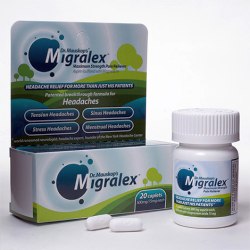
Dr. Mauskop’s Migralex, a new abortive, was finally announced by Dr. Alexander Mauskop, director and founder of the New York Headache Clinic.
Dr. Mauskop has been working on this one for a long time. He was also involved in the testing of an excellent preventative medication that we’ve talked about here before, Migrelief.
This abortive contains two very simple ingredients, both of which you’re most likely familiar with.
First, aspirin. Aspirin of course is one of the world’s favourite abortive drugs. Aspirin alone for migraine hasn’t been studied as much as you might think, though it does seem to help some. However, aspirin in combination is commonly used for migraine and other headaches – take for example Excedrin Migraine. With combinations, finding the right balance is always a challenge.
The other ingredient is magnesium. We’ve often talked about magnesium as a preventative. But it also seems to have a benefit as an abortive. Sometimes patients with migraine in the emergecy room are given a shot of magnesium, for example.
Once again, it’s the combination and balance that are key here. How much to use, what types work well together, how to coat the tablet – all that. Dr. Mauskop was also looking for a medication that could be used by a wide number of people with a minimum of side effects.
It might surprise you to discover that Migralex is not being promoted for migraine. But if you take a look at the name, you can see the direction it’s headed. The truth is that more studies are being done in hopes of official approval in the USA.
In the meantime, Migralex is being offered for "Tension-type Headaches, Stress Headaches, Sinus Headaches, Alcohol Headaches, Sex related Headaches, Menstrual Headaches, and Exertion Headaches" …and more.
These, you’ll notice, are not a list of all official headache classifications – the point is Migralex should help a lot of people with a variety of headache pain, not to mention some other symptoms as well.
Adults can take two tablets every six hours with a full glass of water.
I’m glad to see this option now available from someone who has done a lot of research in this area. I hope it will continue to show good results, and that it will soon be more widely available.
This week – double check what you’re taking your medication with.
What am I talking about? Well, most of us are familiar with the fact that some medication should be taken with food, some on an empty stomach, and so on. Sometimes this impacts how the drugs work in your body. Other times it’s just a matter of what’s more comfortable for you.
But there are other issues that you may or may not hear from your doctor. Taking certain medications along with supplements, for example, could be a problem. You may find both work better if they’re taken at different times. Or you may need to cut out a supplement while taking a certain medication.
There is increasing concern about taking medications with juice – not just grapefruit juice, the most famous, but other juices such as apple and orange. Various chemical interactions could mean you end up with more or less medicine than you bargained for – both a serious problem. Try sticking to water.
Even taking some supplements together can be a problem. For example, many people take calcium with magnesium, not realizing that you need to take magnesium for migraine without calcium (read more here).
So – quick tips:
Try taking your medication with water, not juice
Make sure your doctor is aware of all the medications and supplements you’re taking
Check a reliable source for yourself to investigate possible interactions. Good online sources include Medline Plus (English and Spanish, includes herbs) and MedBroadcast, and others. I prefer to have a published work on hand, and like The Pill Book.
What is 1% Thursday?
Every Thursday at Headache and Migraine News (weather permitting) we’ll talk about one measurable, practical thing we can do to make our lives just 1% better. Usually it will be something very easy, sometimes it will be a challenge. Let us know if you try it, or share an idea of your own – and maybe a year from now we’ll see that things have really changed for the better!
Progress is being made to make needle-free injections widely available. The DosePro needle free system is one of these. Zogenix plans to launch SUMAVEL DosePro in January (2010), a needle free sumatriptan injection.
Certain studies have suggested that taking your abortive medication earlier during your migraine attack is critical. But the fact remains, if you’re going to take the medicine, the sooner it gets into your system the better.
An injection allows you to get the relief that the medicine offers within minutes. And the DosePro system is very easy and quick.
You may notice, however, that whatever the inference may be, this system is not being marketed as "pain-free". Yes, it still hurts. Though it may have advantages over a needle injection, being painless isn’t one of those advantages.
Some patients aren’t aware that there are now very easy needle injections out there as well. Even needle injections have come a long way since the days of one big needle, careful handling, and all the other horrors you may imagine.
Patients can use a simple pen like device to give themselves a quick injection, and they may find faster, more effective relief over the oral medicine.
The pharmaceutical company Merck & Co., Inc was at the 14th International Headache Congress in September, talking again about the migraine drug Telcagepant. And hopes that Telcagepant will see the light of day aren’t dead yet.
After concerns about using Telcagepant as a migraine preventative, Merck has moved ahead with trials using the new drug as an abortive. Researchers were originally concerned when some patients developed high levels of liver enzymes (transaminases). (more on the background of Telcagepant here)
In one of the new trials, none of the patients had high levels of liver enzymes apparently caused by the drug (you caught that, right? Some did have the problem, but investigators felt it was not drug related.).
Two trials were reported on. First, compared with rizatriptan (Maxalt, Rizaliv, Rizalt), how many "adverse events" would patients experience?
Investigators didn’t look for any side effect here, they only measured events from a predetermined list. The adverse events were not too serious with either group, and there tended to be fewer with Telcagepant.
The problems more common with Telcagepant included nasopharyngitis, upper abdominal pain, and nausea and vomiting. In the other study, patients on telcagepant were more likely to feel sleepy (than those on a placebo). In an earlier study, Telcagepant was less likely to cause nausea than zolmitriptan, so we’ll see how it continues to compare with the triptans on this one.
But did Telcagepant fight symptoms of migraine? Yes, the results still look positive. In a large trial of 1,677 patients, researchers used doses of 140mg or 280mg and measured symptoms after 2 hours. They were interested in pain freedom or pain relief (reduction to mild or none). These charts show the percentage of patients helped at either dose, compared to a placebo:
Merck is preparing to have some major discussions regarding Telcagepant later this year with regulatory agencies. It remains to be seen if this drug will be the next big one for Merck and migraine, though it’s still showing promise.
The bad news is that Merck has shelved MK-3207, it’s other possible oral calcitonin gene-related peptide (CGRP) receptor antagonist for migraine treatment. So research on this type of drug continues to be stop and go for Merck.
However, Dr. David Michelson, vice president of clinical neurosciences, said Merck is still committed to this type of research: "Merck believes that the blocking of CGRP receptors remains an exciting pathway to address the underlying pathophysiology of migraine. We are continuing our efforts to offer patients a new treatment approach."