A New Nasal Spray, and some Tips (podcast)
A new podcast from Headache and Migraine News – hope it’s a help to you!

Podcast: Play in new window | Download
Resources related to the podcast:

A new podcast from Headache and Migraine News – hope it’s a help to you!
Podcast: Play in new window | Download
Resources related to the podcast:
Thanks to Adrie from South Africa for this question about migraine attacks around the time of her menstrual period (ask your own question here!).
First, a quick definition, because it is important for treatment. There are two classes of migraine here. One is menstrually-related migraine. This is when attacks occur at least 2/3 of the time day -2 to +3 of your menstruation, but attacks also occur other times of the month.

There is no doubt that hormones are related to these attacks – but, surprisingly, just how they’re related is a bit of a mystery. The theory that we should simply be able to adjust hormone levels to solve the problem has not been the silver bullet.
Adrie is actually already a ways down the road searching for treatment, but hopefully we can help her or some other reader consider some options that haven’t been investigated fully. And remember, we’re speaking more generally anyway, because we will not diagnose a specific case here (even if we had enough information, which we don’t).
But first, the “treatment” that should not be tried – hysterectomy. Dr. Robert Cowan explains well in his book The Keeler Migraine Method:
In the past, doctors tried to modify this trigger through hysterectomy but today we know that hysterectomy will not improve migraines and can in fact make them significantly worse. Hysterectomy causes chaos in estrogen levels, estrogen receptors, and the chemicals that estrogen modifies. A migraineur’s brain does not like chaos. It likes things nice and regular and predictable.
So what are better options? Here are a few:
Final note: Keep a diary. Keeping track of your attacks is extremely important with menstrual migraine, even though you would think it isn’t. Some women find that, for example, when they give into a premenstrual craving, they make symptoms worse. Dr. Cowan, mentioned above, gives one story of a patient that illustrates well the need to keep track:
Partial triggers may show up in association with other triggers. For example, I had a patient who got her most severe headaches when she had her nails done during her period but not at other times. It took her about four months of journaling to pick this up. When she changed salons to a place that didn’t use heavy lacquers, she was fine.
Menstrual migraine is a difficult beast to fight (see 8 Reasons why Menstrual Migraine is “different”). But there are good solutions out there. Feel free to leave a comment, letting us know what has worked well for you!
At least a couple of articles have been circulating promoting a tension headache remedy that is quick, and free. And certainly worth a try.
Tension headaches are, as you may know, now commonly called “tension-type headaches”. Why? Because doctors now know that these headaches aren’t simply caused by tension. Your muscles can be very tense, and you may not have any symptoms whatsoever. And – the reverse can also be true. (For more, see Just what is the “Common Headache”?)
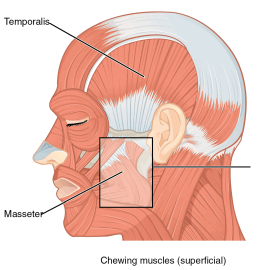
That may be one reason why quitting chewing gum seems to help many people lessen headaches.
The “10-second remedy” is similar – it involves massage of the masseter muscle, a muscle used when you chew food – or clench your teeth at night. There are a few ways to massage here. One is using your fingers to put pressure on the front of the muscle (toward your mouth), then push back (up toward your ear).
Another method, the one you’ll read about in the following article, is to let the jaw do the movement.
Try it next time you feel a headache coming on. If it works, it may mean that jaw issues such as TMD are contributing to your headache symptoms.
The 10-Second Tension Headache Remedy a Physical Therapist Swears By (from Prevention)
Vitamin supplements are a hot and controversial topic. Many times the supplements simply don’t contain what the label says they do. And even if they do, a big question is whether various supplements are actually helping us – or just wasting our money – or actually harming us.
 Regular visitors to Headache and Migraine News know that many supplements have helped many people, particularly with migraine. But we do have to be careful to use products from quality brands, and to be sure that we know how to read and understand labels.
Today, we’re talking about something a little different. Many labels simply have outdated information when it comes to “Recommended Dietary Allowances” – and probably will for many more months, even years.
This is because we have learned a lot more since these recommendations were first introduced, decades ago.
The video below, from ConsumerLab.com, provides a helpful overview. Although specifically referring to the USA, it will be helpful for everyone, and you can investigate the latest information in your own country. The helpful page that Dr. Cooperman refers to can be found here: Recommended Daily Intakes and Upper Limits for Vitamins and Minerals
Bookmark this page and use it. Remember that even these updated amounts are very controversial. Also remember that you should be getting most of your vitamins from real food! However, pay special attention to multivitamins and other supplements that go well over the recommended amount, and especially those that may get near the upper limit. Getting too little may not make much of an impact. But getting too much can cause health problems – sometimes serious ones.
In the past, we’ve discussed systems for rating headache pain and disability, but today we’re highlighting one system in particular that people have found to be very helpful. It’s called the Traffic Light System
There are actually some variations of this system – not surprising, because it’s a very simple set of 3. As mentioned in the post linked to above, you could simply say “mild” “moderate” or “severe”.
But a recent report from the University of Toronto described it in perhaps a more helpful way, as shown below.
 The advantages of this system? It’s simple – only three options. No more trying to decide if you’re headache is a “4/10” or a “5/10”. It’s colourful – easy to see at a glance if you use these colours on a chart, or a calendar.
But maybe most helpful of all is that it describes disability more than pain.
Many people who have migraine – in particular chronic migraine – know that pain may be low one day, and yet you still feel very disabled. It could be dizziness, nausea, or other related symptoms. Other days, the pain may be higher, but you’re still able to “push through” and get some things done.
So it is very important to know not only pain levels, but just how disabled you may be over the course of a month.
Other people are finding this helpful. The Chicago Dizziness and Hearing Clinic has used a similar system. Here’s someone who incorporated a similar system into a diary (except eventually using 4 colours), and her explanation of why she likes it.
This won’t satisfy those who want a more precise measurement, but it will be useful to those who want a simple, understand-at-a-glance system.
