What is behind the dreaded Cluster Headache?
Just what causes one person to be a cluster headache sufferer? As with many headache disorders, the cause of cluster headache is not completely understood. But we are getting closer.
So here’s the question – what parts of the body are involved in the cluster attack? And how are they involved?
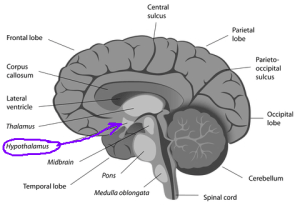 |
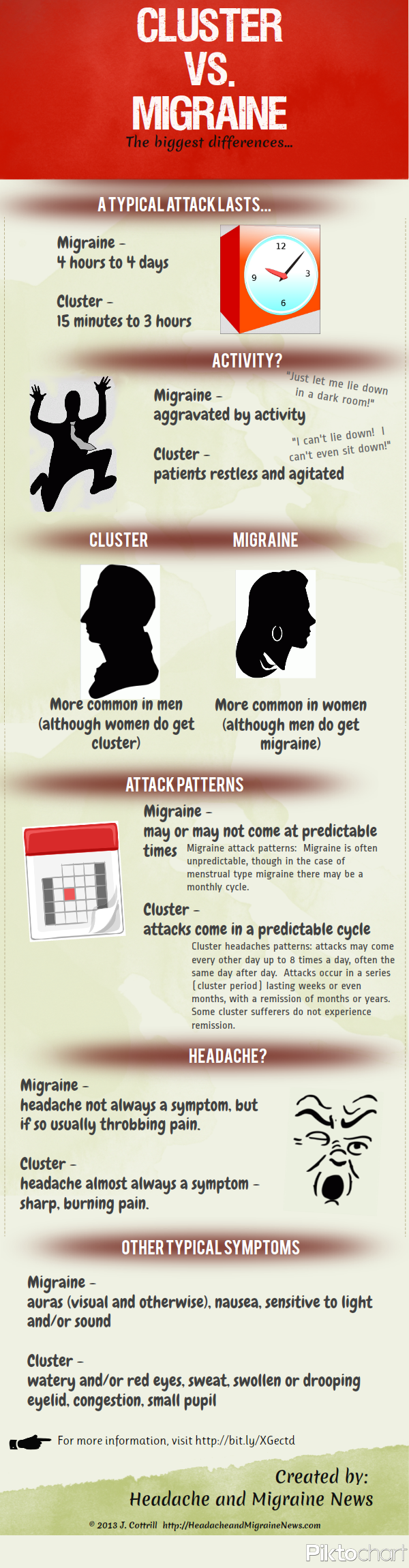
1. The hypothalamus: The hypothalamus is now thought to be the launching pad of the cluster attack. It first becomes a suspect because it controls your 24 hour clock. Cluster is a very regular disorder, in that it comes in cycles (hence the name – cluster).
About the size of a almond, the hypothalamus is found right above the brain stem. Thanks to modern imaging techniques, we can see differences in the brain of a cluster headache sufferer.
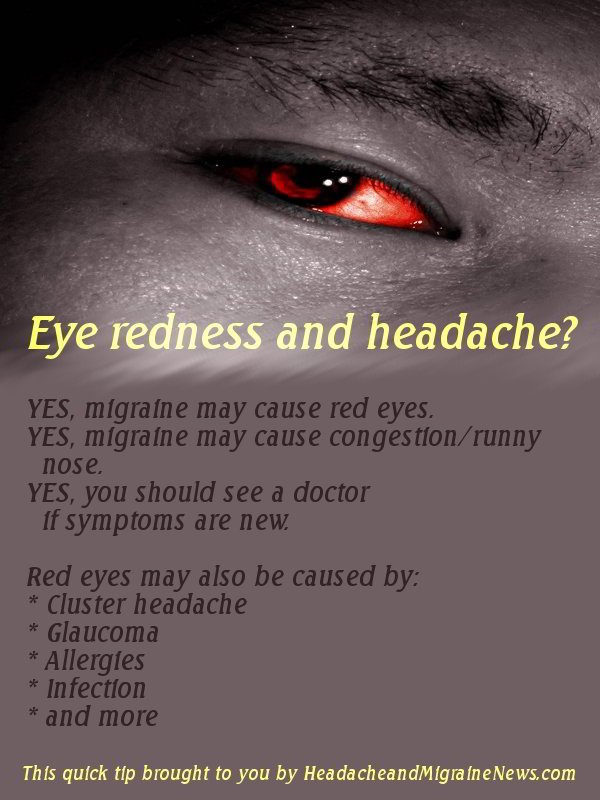
2. The trigeminal nerve: Parts of the trigeminal nerve are activated during a cluster attack. This is a very important nerve in your face and jaw. It’s involved in the eye pain, tearing and redness of cluster. It can also help bring on the congestion.
3. The sphenopalatine ganglion: A “ganglion” is a group of nerve cells. This particular ganglion is located behind the nose. Some cluster patients have found relief after surgery on the sphenopalatine ganglion.
4. Blood vessels: Changes in blood flow may be involved in cluster, but we know now it’s not as central as we once thought. There can be changes in blood flow, but the question is whether or not this is a result of an attack or a part of the cause.
5. Histamine: Histamine has been a suspect because you can sometimes trigger an attack with histamine. However, so far research has not been convincing.
We’re learning more and more about just how the hypothalamus is activating during a cluster attack. Thanks to modern imaging and analyzing techniques (such as voxel based morphometry), we can see more of what goes on during an attack. This has led to better treatments, but we still have a long way to go.