
My Child was hit in the head – What should my doctor do?
After a blow to the head, it’s certainly wise to see the doctor. The blow could be from falling, from a sporting event, from a fight, from an accident – but whatever it was, it can result in brain damage and needs to be taken seriously.
Many organizations have a specific process that they want doctors to go through when seeing a patient who may have a concussion. An excellent example of this is the Concussion Algorithm from Hamilton Public Health Services in Hamilton, Canada.
You can download the one-page document for yourself using the link at the bottom of this article. But here are some highlights.
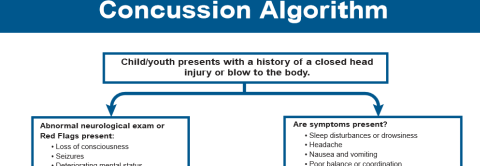
If there are certain red flags after or even before an examination, the patient is advised to go to the emergency department immediately. Red flags include loss of consciousness, slurred speech, or ongoing vomiting.
If the red flags aren’t present, but there are other symptoms (such as headache, dizziness, irritability, or sleeplessness), doctors need to check for factors which may predetermine the patient to more serious problems. These issues will help doctors decide how much rest/recovery time the patient needs.
If no symptoms are present, patient may return to normal activities (with caution, I would add. Symptoms may show up later, or another blow to the head may make matters worse.).
It’s worth your time to have a document like this handy, particularly if your child is heavily involved in sports, so that you and your child will know what to expect.
Concussions can be very serious, and can lead to lifelong problems. Taking them seriously right from the start is vital to your child’s health.
To pick up the document, see Concussion Algorithm [Important: Original link no longer available. This is an archives link.]. If you’re actually in the Hamilton area, you’ll notice that there is a second page with emergency numbers and addresses.

 There is one face mask that we haven’t talked about, and it has become very popular. I wanted to find out why, so I did a little investigation.
 Now, you may be wondering if this will actually work well for migraine patients – I was curious too. So I checked out the reviews again. The answer –
 Many people don’t realize that there are a lot of ingredients in medications beyond the “main” “active” ingredient. The same goes for supplements and vitamins.
 But there are times when MRIs (magnetic resonance imaging) should be requested. Along with concerns that too many MRIs are being done is the concern that doctors aren’t asking for them at the right time. A recent
  Your prognosis will vary drastically depending on what type of dysautonomia you have been diagnosed with. As we mentioned yesterday, some types of dysautonomia are progressive, and can shorten your life. Other types are chronic, and never go away completely. Some resolve on their own. Some are severely disabling (limiting your ability to get out of bed), while others are mild.