Cluster headache has the very appropriate name “suicide headache”. It’s rare enough that we haven’t studied it nearly enough, and yet common enough to affect our communities in a big way, and individuals in a huge way.
With a shortage of good treatments, you would think that doctors would prescribe whatever will work that’s not a huge risk. So why is one treatment often overlooked?
That treatment is oxygen therapy.
Oxygen therapy for headache was first mentioned in literature almost 80 years ago, so this is not a new therapy. It’s also considered to be a fairly safe, stable option. As the Migraine Trust says:
Oxygen is one of the safest ways to treat cluster headache. You need to breathe the oxygen in at a rate of between 7 and 12 litres per minute. The treatment usually starts to work within 15 to 20 minute. For some people the attack is delayed rather than stopped altogether. [source]
An article from the National Headache Foundation last month lamented the fact that oxygen therapy is still underutilized for cluster headache:
Despite treatment guidelines recommending the use of oxygen for the acute therapy of cluster headache, oxygen remains underutilized. A recent study looking at the cost of oxygen for cluster headache found the reason for its lack of use may be because of poor physician awareness of the treatment, as well as the lack of understanding for how to write and fill a prescription for high-flow oxygen.
According to a recent study, the price of oxygen therapy varies quite a bit, but averages out at around $1000 per year in the USA. Most private insurance plans will cover it. So – why not make use of it?
What has everybody been reading here at Headache and Migraine News? In case you’ve missed them, here are the ten most popular posts from the past 3 months, most popular first. The three in bold text had the most “likes” on Facebook.
The “Migraine Barometer” is back…: What if you could get an audible warning when you were likely to get a weather related headache? This marine grade barometer is for those serious about fighting barometric pressure related symptoms.
CBD Oil for Migraine: Will this and other cannabis related treatments become mainstream in the long term?
Empty sella syndrome (ESS), or empty sella turcica, is a rare condition in which the sella turcica, a depression in the skull, is partially or completely filled with cerebrospinal fluid, resulting in a displacement or flattening of the pituitary gland. The common name is a strange one, since the sella is not actually empty, which is why it’s also called intrasellar arachnoidocele. But you can see why many prefer the simpler empty sella syndrome, or ESS.
ESS may have a known cause, making it “secondary”. It could be a trauma to the head, a tumour, infection, radiation therapy, or some types of surgery. It could also be “primary”, with no apparent cause.
ESS is rare, and usually goes unnoticed, with no noticeable symptoms at all. But in some cases there are symptoms including – you guessed it – chronic headaches.
There are more likely to be symptoms with secondary ESS, because there are other issues that may cause a problem. But primary ESS is hard to catch. It’s usually found when your doctor isn’t looking for it, through a CT or MRI. Your doctor may also do a lumbar puncture or retinal exam to check for pressure.
Even when it comes to chronic headaches, it is questioned how often the headaches are a result of the ESS, or how often they’re simply coincidental.
When ESS is severe, it could cause high blood pressure, and high fluid pressure in the head. The fluid may even leak out through the nose. The cranial pressure could cause vision problems, even partial blindness.
ESS could actually affect the functioning of the pituitary gland, and lead to symptoms such as decreased sex drive, fatigue, and difficulty staying warm.
If these severe symptoms are present, it may tip your doctor off. But if you just have chronic headaches, it’s likely few doctors would look for ESS specifically, because it’s so rare. However, some symptoms may lead them to check for cranial pressure. For example, you may find your headaches decrease when you’re lying down.
ESS is also more common in obese middle-aged people, and slightly more common in females.
Since ESS is so often symptom-free, even if you have it your headaches may not be connected. You’re most likely to need treatment for the headaches, and not specific treatment of ESS.
There have been some studies into surgery for ESS, in severe cases, and the surgery has helped some people.
No, narcolepsy is not a type of epilepsy that comes from narcotics. In fact, it is neither a disease related to narcotic use, nor a form of epilepsy. Narco in this case comes from a latinized form of the Greek word for stupor or numbness. And yes, someone with narcolepsy is a narcoleptic.
Narcolepsy is actually quite a serious chronic sleep disorder. Basically, sleep can sneak up and attack you during the day – for example, you may be extremely drowsy during the day, you may end up with muscle weakness/slurred speech/loss of muscle control, and you may even experience hallucinations.
Narcolepsy is related to other sleep disorders, so patients may have two or three disorders together.
As a result of sleep problems, many with narcolepsy also gain weight, and have sexual issues (such as a low sex drive, or even extreme sleepiness during sex.
We’re not sure how narcolepsy is related to migraine (although we’ve seen the link before), but a new study seems to show a strong link. Of course, migraine and sleep problems often go together. And fatigue and other symptoms of narcolepsy often accompany migraine, though usually in a different form.
It’s important to try to get to the root of the problem in children. Migraine, narcolepsy, and depression can all be related. And sometimes treating one can help with the other.
Read more a summary of narcolepsy from the Mayo Clinic. If you think that you may suffer from narcolepsy and migraine, this personal story may help you – Narcolepsy and Chronic Migraine. We would love to hear your comments if you’ve struggled with this chronic disorder.
It’s time for an update on our discussion of pillows for migraines. You may remember, this was the topic of a podcast six years ago – The Practical Pillow Podcast. Since then, there has been a lot more written on the topic.
Unfortunately, if you’re simply looking for the “best pillow for migraine” you’re going to be disappointed. Yes, there is a lot of advice out there. But a pillow is a very personal thing. And a pillow that works for your friend may not work for you. You don’t sleep the same way, your headache condition may be different, even simple things like room temperature, or your weight, could make a difference.
So here are some of the most popular pillows for migraines today, and some quick facts about them.
Memory Foam Pillows: Let’s start with the simple memory foam pillow. These have gained in popularity over the past few year, and have helped a lot of people. There are variations on the memory foam pillow, which we’ll see below.
If you haven’t looked at pillows for a few years, you’ll see that things have changed. The technology has improved quite a bit, and there is much more variety. One of the most popular today is the Z Zoned Memory Foam Pillow, which is supposed to be a lot softer than similar pillows from past years. They also make a travel pillow.
A common complaint of these pillows is that they tend to have a manufacture-chemical smell at first. The smell does fade, but migraine patients find they need to leave the pillow out for a while before using it.
Still, many migraine patients used them. One reviewer writes:
I suffer with regular migraines and I quickly learned that the pillow I slept with was a huge factor on whether or not I was going to wake up with a migraine or not so I am very picky, so lets say, used to suffer with regular migraines! Basically I need my head to feel it is floating on a cloud of nothing or I will be miserable when I wake up. I chose the high loft so my head doesn’t “bottom out” and kinda just suspends in this middle of cloudy softness… call me weird in the comments if you want but once you try an amazing high loft pillow you’ll understand what I mean 🙂 [source]
Countoured Neck Support Pillows: Many looking for pillows for migraines immediately think of contoured pillows. Many of these are memory foam as well (which is why I spent extra time talking about memory foam above). A typical example is the inexpensive MEJOY Memory Foam Pillow. If you’re looking to avoid memory foam, check out the Snuz Neck Support Pillow (there is an extra-firm option).
Buckwheat Pillows: Buckwheat pillows have a number of advantages. They provide premium support, being very firm. They have no chemical-smell. They adjust to the shape of your head. And they’re cool. You can even put them in the freezer for an hour before you use them to really cool your throbbing head.
I’ve often talked about buckwheat pillows for migraines. If there is a downside, it’s that they are very firm. It really depends on how you sleep. Also, if you move around a lot, you can hear the shifting of the buckwheat hulls.
“Cooling” Pillows: Because of the pulsing, hot headaches that many of us get, “cooling” pillows are a great option. Now, just a caveat here. Cooling does not necessarily mean that the pillow continually cools you all night. That may be the case if there is constant water flow. But generally it means it doesn’t hold heat in like many traditional pillows do.
One well-known brand is Chillow, but Chillow has changed. Generally what you get today is a “cooling pad” which you can use by itself or with a pillow underneath. You actually put water in the pad. Although some people swear by them, the hassle of adding water and possible leaks have hurt the popularity of Chillow (on the other hand, the price is right if you want to try it!).
A popular and inexpensive example of today’s cooling pillows is the Bluewave Bedding Gel-Infused Memory Foam Pillow. It’s ventilated, and gel-infused, to keep the temperature from rising while you sleep. You can also get very slim versions.
You can also get a pad to put on your favourite pillow, like the Penguin Cooling Pillow Mat. But before you just get a pad, remember you should be changing your pillow every year or two.
As you have probably guessed, there are also combinations of the above. Take for example the ViscoSoft ARCTIC GEL CONTOUR Pillow, which is a hypoallergenic, memory foam, contoured neck pillow!
Changing your pillow can make a huge difference in your health. Many people have found pillows for migraines – that is, pillows that fight migraine, as you’ll see in the reviews for the products above. But sleep remains very personal. You’ll have to try the pillow for yourself to see which one works best.
Final advice? Keep your head cool. If you buy memory foam, be prepared to leave it out of the box for a week or two before you use it. And make sure you make a good pillow a priority. You’ll be spending a lot of time on it!

 That treatment is oxygen therapy.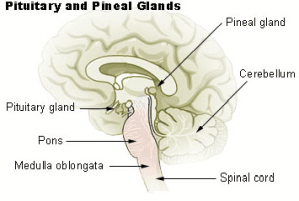
 Narcolepsy is actually quite a serious chronic sleep disorder. Basically, sleep can sneak up and attack you during the day – for example, you may be extremely drowsy during the day, you may end up with muscle weakness/slurred speech/loss of muscle control, and you may even experience hallucinations.